Technical Debt Collectors: China’s Coders Count Cost of AI Errors
Qi Lei always knew artificial intelligence would rock his industry — he just didn’t expect it to happen so fast.
The 35-year-old programmer began coding in 2011, a golden age for app developers, and launched his own business in 2022. Back then, orders were flooding in, and he could charge up to 300,000 yuan ($43,500) to build custom mini-programs. Now, he’s lucky if he gets 20,000 yuan.
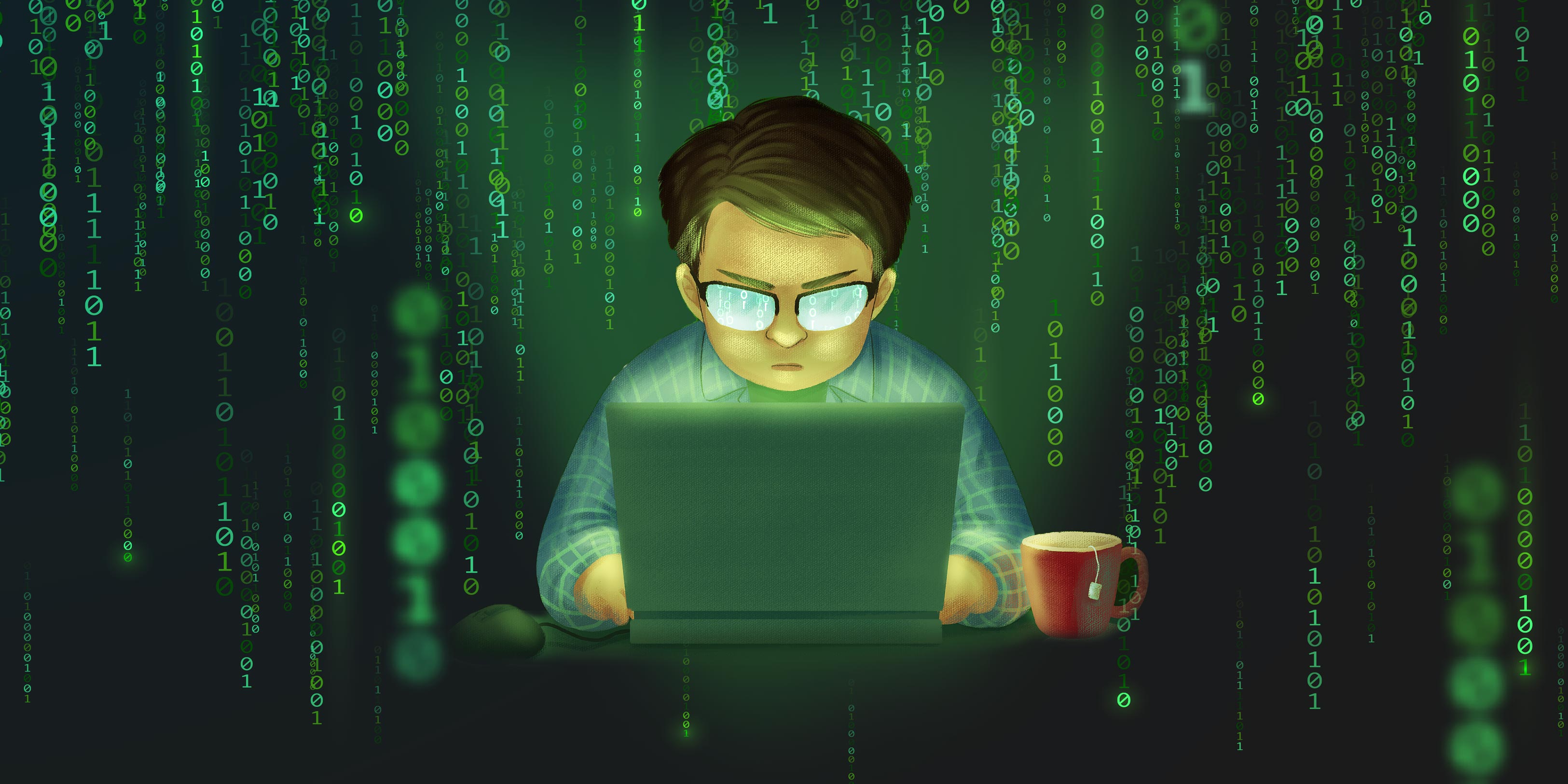
In just a few years, the explosion in AI has not just sent profits plummeting for small businesses like Qi’s, it’s refactored the entire profession — transforming programmers from respected world-builders to “tech janitors” who only clean up the messes created by AI.
For those in the industry, the issue largely stems from a perception among customers that AI has made it much easier to build an app or mini-program, leading to unrealistic demands.
Qi, who is based in Changsha, capital of the central Hunan province, recalls a recent pitch meeting in which a client pulled out his phone to show an AI-generated framework. “He said he could do that for free, so why was I still so expensive?” Qi tried to explain that the framework was an empty shell, that the real technical value was in fixing vulnerabilities, refining logic, and maintaining the system. But the client had no interest in listening — Qi had to slash his quote by almost half to secure the project.
The developer industry is also now awash with freelancers — many of them experienced programmers laid off by major tech companies amid the emergence of AI — offering super-cheap services, further dragging down prices across the board.
Cheng Xiao works in sales for a software company in Xuchang, in the central Henan province, that advertises its services as “AI free.” Despite guaranteeing the human touch, it has still had to cut its prices by almost 50% since 2023.
The 25-year-old says the company can build an app “visually similar” to the leading Chinese resale platform Xianyu in 20 working days, with six months of free maintenance, for 12,000 yuan.
However, even that seems steep for some. A programmer who asked not to be identified says clients today are expecting to spend just a few thousand yuan to build something like Xianyu or Taobao, the Chinese e-commerce app, “but that’s technically not possible.”
Qi used to take on just three or four projects a year, but now his company has to handle dozens of small orders just to stay afloat — while the workload has soared, profits and salaries have fallen.
Wei Xiaodong, a freelance programmer in Guangzhou, capital of the southern Guangdong province, jokes that he’s lucky to work from home, as he couldn’t afford to commute. “With AI and the insane competition, IT engineers’ salaries have dropped about 35%,” he says.
Noodled thinking
For all its efficiency, AI can also bring countless headaches, not least because its code often clashes with established programming practices.
According to Wei, before 2023, building a dual-platform mini-program — one interface for customers and another for merchants — would take two programmers up to six weeks. AI can now generate the basic scaffolding within hours, with interactive pages, basic functions, and preliminary logic.
“But a client can ask for Chinese noodles, and the AI will serve them spaghetti,” he says, adding that it requires a human to untangle the mess. “The bugs that AI creates aren’t easy to fix. It’s never about changing one or two lines; a tiny flaw can mean reworking the logic of an entire module.”
When programmers point out an error, the AI will apologize and acknowledge the problem, Wei says. But the new code it produces often introduces new bugs somewhere else, and the process repeats.
Qi, who acts as both product manager and backend engineer, explains that a typical project used to require three frontend programmers, but AI can now generate more than 60% of that work with a single command, from page design to simple functions. Then, just one experienced programmer is needed to integrate and fix the results. He says that this shift — from creation to evaluation — has drained many workers of any sense of achievement.
On the surface, the development process looks the same: discuss the idea, quote a price, confirm requirements, design prototypes, review with the client, develop frontend and backend, and integrate interfaces. But AI has disrupted the core development stage.
After the design review, frontend engineers now use AI to generate code and organize documentation, then backend engineers rely on the same technology to construct logic and process data.
This has reshaped team structures. Qi’s frontend team once consisted of a senior developer and two juniors. Now, he has just a frontend developer, backend developer, software architect, and designer. Together, they can build an app in under three months. In the past, this would have required a staff of about 10.
Software architects have arguably been the worst hit by the explosion of AI, which can quickly generate standard templates to be adapted as needed.
Industry veterans say that generic app or mini-program designs priced from 3,000 to 5,000 yuan are always produced using AI frameworks, allowing one programmer to juggle three projects. However, the end product is rarely reliable. “The old adage holds true: You get what you pay for, even in the age of AI,” says Wei.
Cheng, who first worked as a backend developer after graduating from university three years ago, had high hopes for AI and was an early adopter. However, in 2024, he worked on a customized mini-program that was so riddled with bugs that the client demanded a refund.
He wrestled with the errors for days, repeatedly turning to AI for help, but it was no use. Cheng accepted it was beyond his ability, and felt he’d been “deskilled” by AI. “It was like I’d been poisoned, and there was no antidote.” Soon after, he switched to a sales role.
Today it’s common to find programmers spending about $20 a month on AI tools, such as Cursor and GitHub Copilot for frontend or full-stack projects, and ChatGPT, Claude, Gemini, and Grok for backend or general coding.
Wei says that AI still tends to fabricate code, especially when dealing with complicated business logic, and often pieces together generic solutions. He feels the technology still can’t deliver the core functionality that many products require.
Some developers also believe that AI struggles with aesthetic judgment, user interface design, and user experience — key territories that programmers appear determined to defend.
Mind the gap
Perhaps the biggest threat to the industry is the knowledge gap opening up between senior and novice software developers. To veterans, AI code is general and ill suited to specific needs, while many newcomers lack the experience required for testing and repairing bad code.
Wei has noticed in job interviews that some young applicants can’t even explain basic coding logic, let alone discuss how to evaluate AI-generated code or adapt it to real business needs.
Cheng has been livestreaming to attract clients, yet most who contact him are not potential customers but job seekers. He receives more than a dozen résumés a day from fresh graduates and programmers with three to five years of experience.
“The industry is already so competitive, but people still want to rush in,” he says. “All I can tell them is that we’re not hiring right now. We’re only taking on salespeople.”
Wei speculates that many young people might believe that AI has lowered the barrier to entry. Although demand for apps and mini-programs is strong, “once they get into the job, they’ll quickly realize that everyone is just barely hanging on,” he says.
After more than 15 years as a programmer, Qi holds more than 100,000 lines of source code,
a significant volume indicating a high-performance system for building, maintaining, and updating software. Yet there’s no room to rest on his laurels. “This is an industry where you must keep learning,” he says. “Every business requirement is different, and new technologies and models are appearing constantly.”
While Qi has chosen to embrace AI, he can understand how many experienced programmers are stuck in a dilemma. “It’s not that they don’t want to learn, but becoming an AI algorithm engineer is a completely different field from app or mini-program development,” he explains. “Crossing that gap is extremely difficult — so many people stick with what they know, even though they are struggling to survive.”
And it isn’t just in the workplace that AI is having an impact. For the first time since starting his company, Qi was reluctant to return home for Chinese New Year in 2026, too embarrassed to face his parents after such a drastic fall in revenue.
Artificial intelligence is not just replacing technology. For those in the industry, there are now no winners, only survivors.
(Due to privacy concerns, Qi Lei and Wei Xiaodong are pseudonyms.)
Reported by Oscar Wu.
A version of this article originally appeared in Youthology. It has been translated and edited for brevity and clarity, and is republished here with permission.
Translator: ChatGPT; editors: Wang Juyi and Hao Qibao.
(Header image: Visuals from Shijue Focus and Vectorstock/VCG, reedited by Sixth Tone)