Two Sessions: China Boosts Science and Tech Spending
China plans to increase spending on emerging scientific and technological industries in 2026, as well as on public infrastructure such as elder care, education, and social security.
The plans, announced March 6 at an official press conference during this year’s Two Sessions, come as China’s GDP is projected to expand by more than 6 trillion yuan ($870 billion) this year.
The “Two Sessions,” or lianghui, are a series of annual spring meetings of the National People’s Congress and the Chinese People’s Political Consultative Conference that set the nation’s economic, social, and political agenda for the year ahead.
Finance Minister Lan Fo’an said this year the nation will allocate more resources toward “key sectors underpinning high-quality development,” and that national spending on science and technology is set to reach nearly 1.3 trillion yuan, a 7.1% increase from 2025.
Six emerging pillar industries — integrated circuits, aerospace, biomedicine, the low-altitude economy, new energy storage, and intelligent robotics — together generated roughly 6 trillion yuan in 2025, a figure projected to grow to 10 trillion yuan by 2030. Over the same period, China’s AI industry is also expected to reach a market size of around 10 trillion yuan.
Education, social security and employment, health care, and housing security expenditures are expected to exceed 12.4 trillion yuan in 2026. Zheng Shanjie, director of the National Development and Reform Commission, said the government plans to renovate about 2,000 public elder care institutions and raise the number of elder care beds by more than 73% in the next five years.
The government has simultaneously tightened internal spending to free up funds for critical sectors. Official overseas trips, receptions, and government vehicles — known as the “three public expenses” — have been cut by more than 7%, while spending on meetings and training has been reduced by 10%. Local governments have also cut costs, with 20 provinces trimming a total of more than 12 billion yuan from their budgets.
At the press conference, Commerce Minister Wang Wentao said that China’s consumer market has remained the world’s second largest for the last five years. When measured by purchasing power parity, the scale of China’s consumer market ranks first. In this year’s Chinese New Year holiday, the growth rate of in-store spending outpaced that of online consumption for the first time in recent years.
China’s A-share market surpassed 110 trillion yuan in total market capitalization this year. Pan Gongsheng, governor of the People’s Bank of China, added that since the beginning of 2026, the central bank has injected roughly 2 trillion yuan in medium- and long-term liquidity.
Looking forward, Wang said authorities also plan to leverage visa-free policies to boost inbound travel and cultural exports. China will also expand imports of medical and health care services to “better meet the growing and increasingly diversified needs of domestic consumers,” he said.
Editor: Marianne Gunnarsson.
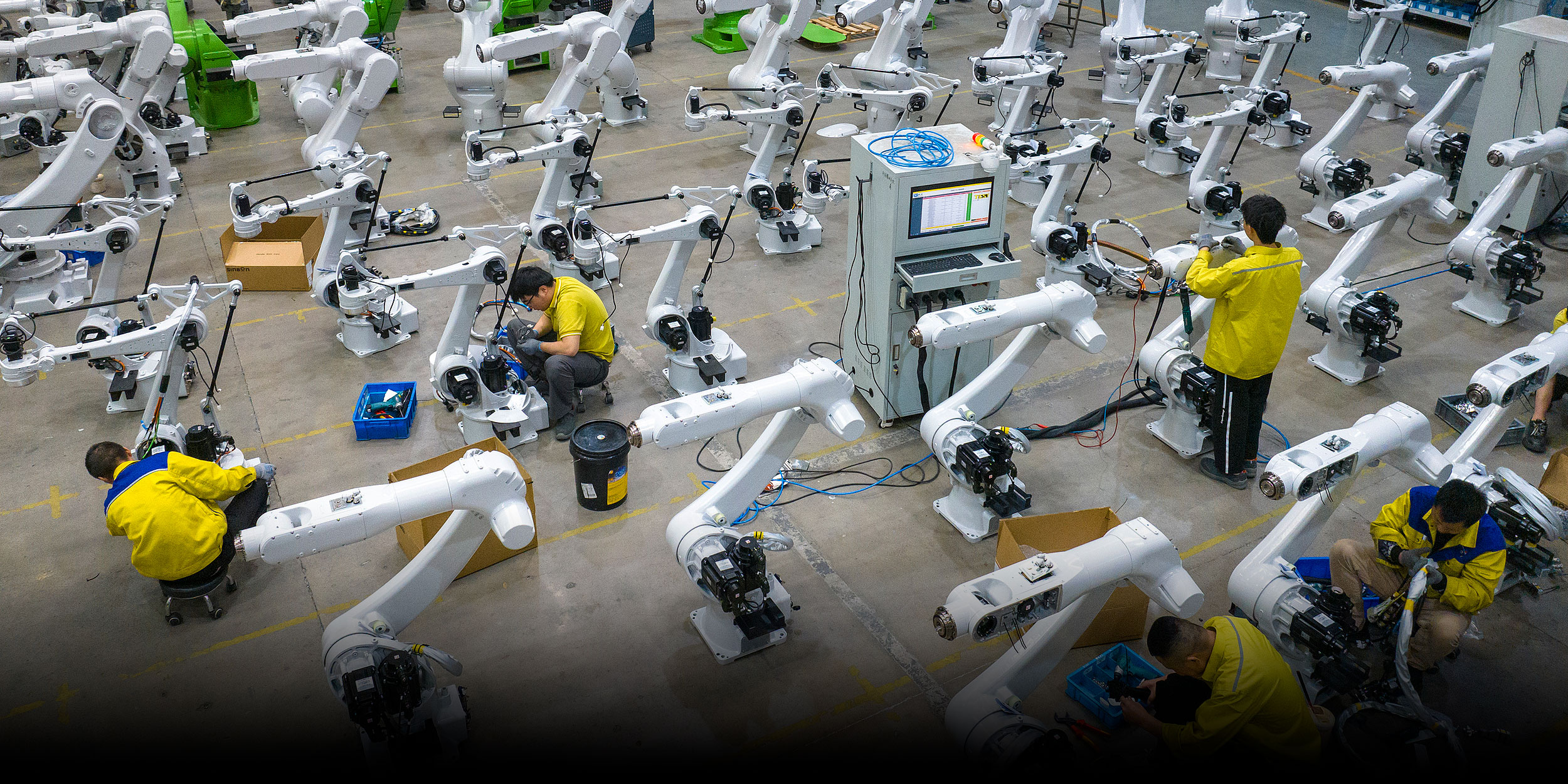
(Header image: Workers assemble robots at a factory in Wuhu, Anhui province, April 25, 2025. VCG)