Going Viral in China: Cultural Heritage Turned Into Spectacle
A group of China’s most popular influencers aren’t performing songs, cracking jokes, or showing off their looks.
Instead, they’re traveling the country and exploring examples of half-forgotten traditional Chinese culture — from performances and art forms to wedding rituals. You might think such cultural heritage belongs in dusty schoolbooks, but on Chinese short video platforms, users can’t get enough of it.
Shi Haifeng, who goes by the online moniker “Nanxiang doesn’t like to eat,” is one of them. In one of his more popular videos, he goes to central China’s Hubei province to learn how to make lacquer plates — a type of artwork where layers of raw tree sap are applied onto wood, then polished to create a durable, lustrous finish. Together with a local craftsman, he spends days up in the mountains draining lacquer from trees, then makes his own plate, with nine golden dragons on a deep black background. The video is one of his biggest hits to date, with tens of millions views across video and media platforms Douyin, Bilibili, and Xiaohongshu.
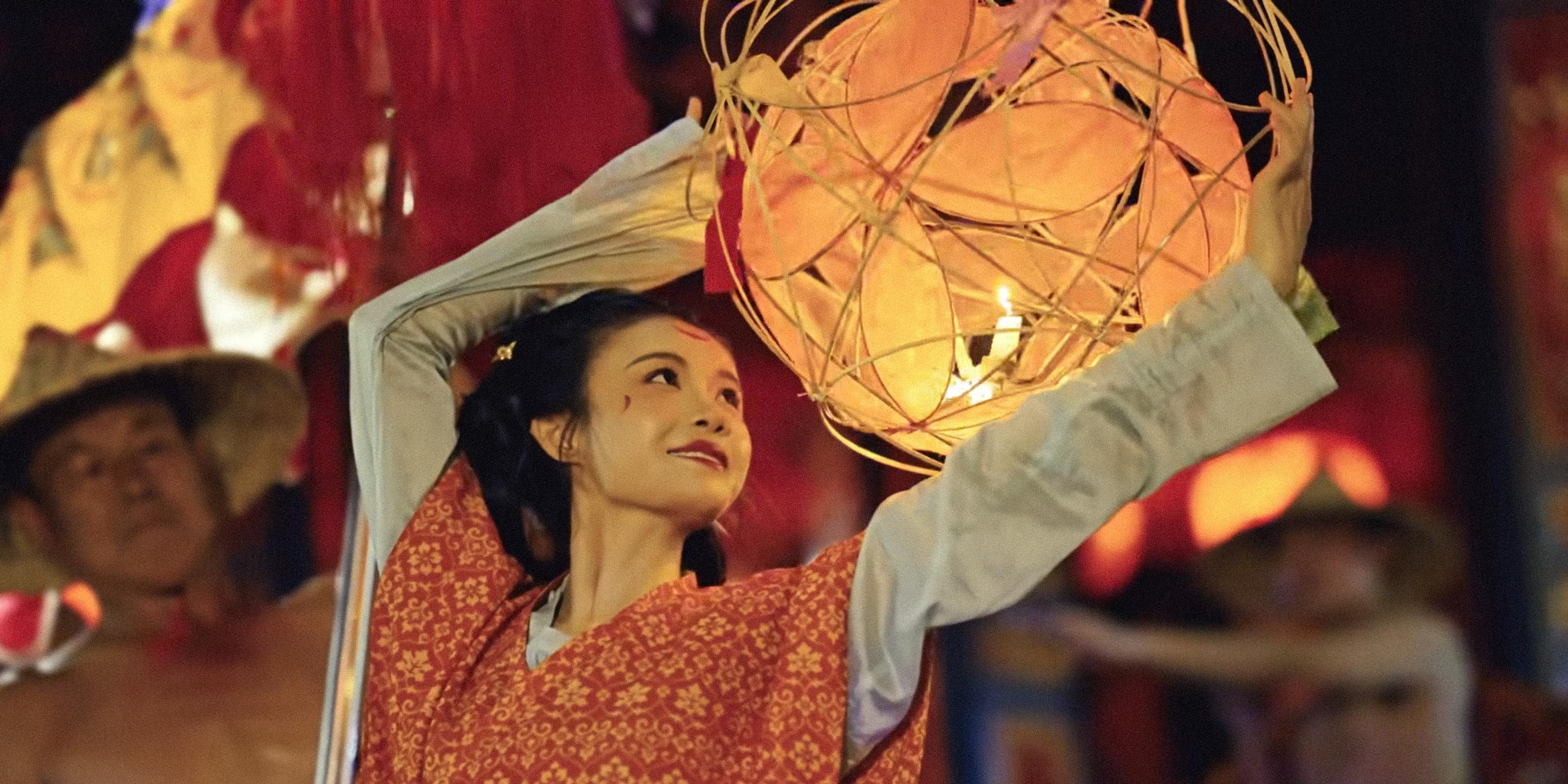
Liu Yaqing, who goes by “Jiang Xunqian” online, is another cultural heritage influencer who has built up a sizable following. Her videos also often involve eye-catching cultural objects, such as “rolling lanterns” — ball-shaped lanterns that are resistant to toppling over — or the traditional garments of Chinese ethnic minorities. One video has been viewed more than 300 million times, according to domestic media.
Shi and Liu are the two most prominent members of a new generation of influencers who bank on China’s cultural history to grow their followings, a once-niche genre that has seen explosive growth over the past two years. Besides having amassed close to 50 million social media followers each, they have also been embraced by the Chinese government. Shi, for example, was invited to attend the parade commemorating the 80th anniversary of China’s WWII victory and was part of state broadcaster CCTV’s online Spring Festival gala last month.
Both creators admit or appear to have been inspired by Li Ziqi, arguably China’s most internationally well-known influencer who rose to online stardom by filming idyllic scenes of life in China’s countryside. Over time, she also shifted toward cultural heritage-themed content.
Cultural heritage influencers tend to cover similar topics, but a comparison in style between Li Ziqi and this new crop of short video talent suggests that they appeal to viewers for different reasons. And their influence in this niche genre now rivals that of Li Ziqi.
Both Shi and Liu began as food vloggers, but with social media already full of foodies, their efforts didn’t attract much attention. Shi then pivoted to recreating obscure recipes from ancient texts, imperial menus, or classics, such as the fictional floral medicine mentioned in the novel “Dream of the Red Chamber.” He then expanded beyond recipes, transforming into a full-time cultural heritage vlogger — a career that sent him to stardom.
In a country with more than 40 UNESCO-listed intangible cultural heritage traditions, ranging from shadow puppetry to tea processing, as well as a rich variety of local practices, there is no shortage of cultural heritage content on the Chinese internet. But Shi and Liu bring in a breath of fresh air to the genre: in their late 20s or early 30s, their appearance breaks with the stereotype of senior, austere artists being the only group to master cultural knowledge, exciting viewers with their youth and energy.
They have also sought to rebrand Chinese cultural heritage as lived experiences with inspiring personal story arcs, rather than old artifacts relegated to documentaries. Liu herself learned how to make “iron flowers” — a ritual in which droplets of molten iron are flung into the air to create a fireworks-like shower of sparks — during a monthslong apprenticeship she documented in full. The video brought her national fame.
That video — as well as one in which Shi does a folk dance with burning charcoal — likewise demonstrates how Shi and Liu are turning cultural heritage into spectacle. Their most action-packed — and at times risky — performances are usually their most popular videos, helping set them apart from creators such as Li Ziqi who typically just focus on crafting objects.
But perhaps the most compelling force lies in the strong undercurrent of patriotism in their videos. In contrast to Li Ziqi, whose seemingly apolitical videos are largely free of narration, these two creators use extensive narration to guide and stir viewers’ emotions.
Shi’s and Liu’s videos unfold like miniature stories: they usually recount the historical background of a particular heritage practice, express lament over its decline, and ultimately end on an uplifting note that the practice is once again being seen and appreciated. Behind these narrative arcs lies a consistent sense of cultural and national pride.
Their sincere marvel and praise of these historical cultural forms seek to evoke a similar reaction from their viewers. At times, their tone leans toward indignation. In Shi’s video about the lacquer plate, for instance, he emphasizes that lacquerware originated from China, yet because the custom was not well preserved and passed onto younger generations, it has now “become a cultural symbol of Japan.” But he stresses that the tradition of lacquerware craftsmanship “has neither been lost nor broken,” and instead, just like China itself, “it has merely been dormant in the dark for over a century.” The revival of such cultural heritage is thus framed as a metaphor for national rejuvenation: “The dragon will one day rise again and look proudly to the East,” he says.
Viewers responded with intense emotion to Shi’s video, with many commenting that they felt touched and proud after watching. Others expressed a hope that such content could spread more widely so that “more people will help protect the treasures left by our ancestors,” and “feel the beauty of our traditional culture.”
Such emotion is not evoked by the work of Li Ziqi. In a 2024 video, she refurbishes a wardrobe coated in lacquer and inlaid with mother-of-pearl. But she makes no mention of the history of lacquerware or mother-of-pearl, choosing not to tell a larger story.
In contrast, in Shi’s own video about mother-of-pearl, he connects the art piece he creates — one inspired by the mythical home of the moon goddess, the Moon Palace — with China’s space program. He explains how the ancient Chinese imagination of the moon has now become reality through China’s modern aerospace achievements: the region where a Chinese lunar rover landed is now officially named “Guanghan Gong” — the Chinese name for the Moon Palace. He then adds, “Unfortunately, mother-of-pearl inlay craftsmanship was registered as UNESCO heritage by South Korea first.” Much like in his lacquerware video, he concludes with a hopeful wish, that “the names buried by time and the glories claimed by other nations will one day return to the soil where they were first born.”
Official endorsements over the past two years have often upheld Shi and Liu as role models for the younger generation to preserve national heritage. But the creators themselves have also articulated this sense of responsibility. Liu has said that although she initially made cultural heritage videos out of personal interest, she later realized that cultural inheritance is also a duty of their generation — what she calls a “bloodline awakening.” Shi also emphasized that “heritage isn’t the work of one person, but of a collective.” In his burning charcoal dance video, he underscores the importance of collective effort: “With more people, we can now perform movements that were previously impossible.” As he says this, the video is framed by a red border and shows five star-shaped fiery trails, references to the Chinese national flag.
The recent explosion of cultural heritage short videos on the Chinese internet speaks to more than just a revival of tradition. It reveals the layered ways in which cultural heritage is being reimagined, repackaged, and emotionally charged in the age of the algorithm. Viewers of these videos are not just watching craftsmanship, but are watching the staging of cultural pride. These videos are not only about preserving the past — they are about reworking it into a form that resonates with individual and collective desires.
In the end, what viewers are consuming may not be tradition itself, but the feeling of being connected to it — through spectacle, through story, and increasingly, through national pride.
(Header image: Liu Yaqing performs with a rolling lantern. From @江寻千 on Bilibili)