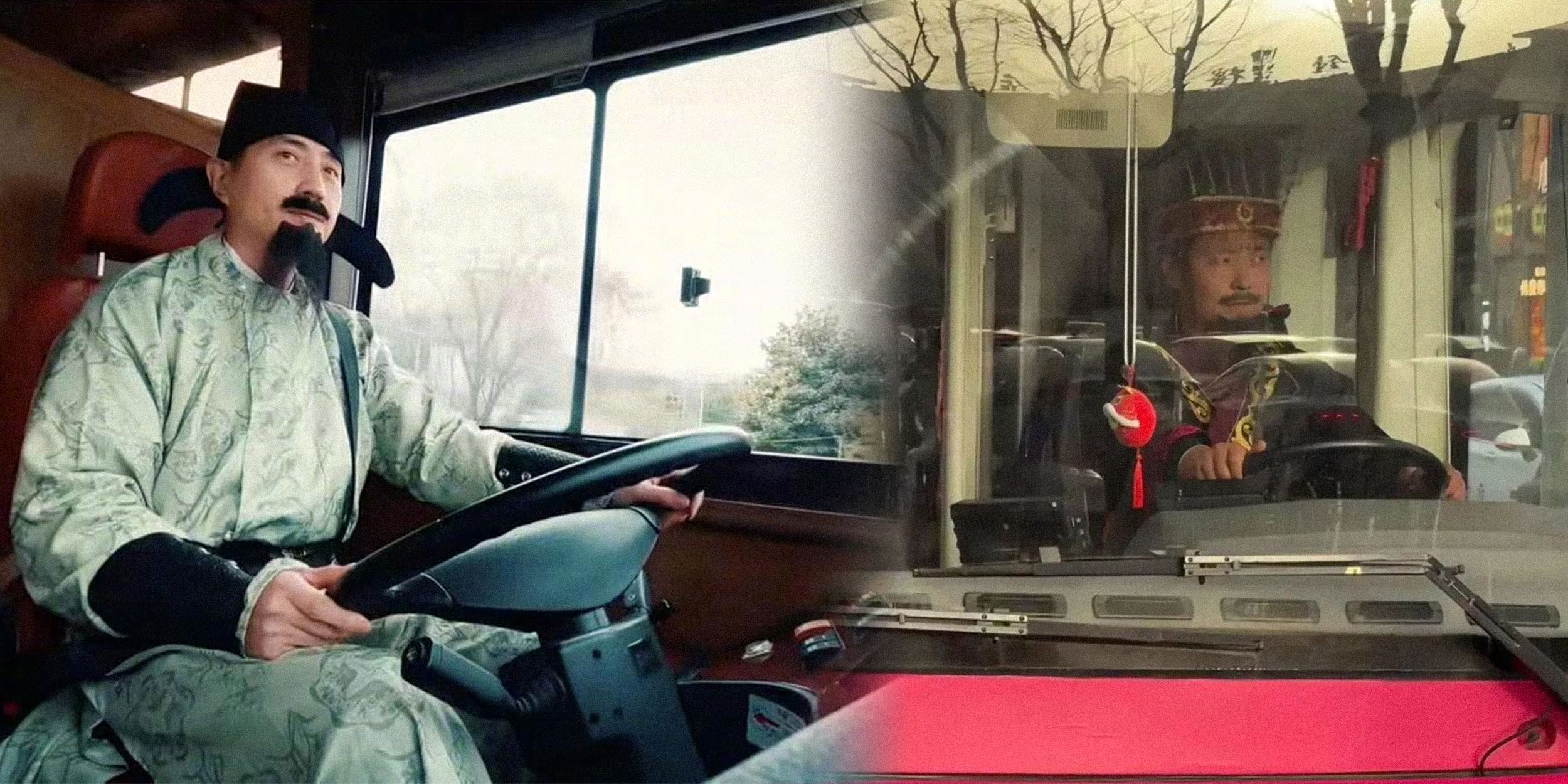
This Spring Festival, China’s Bus Drivers Cosplayed Emperors
More than 2,000 years after Qin Shi Huang built China’s first imperial highway, the emperor was spotted navigating traffic in the northwestern city of Xi’an. And in southwestern Chengdu, Tang dynasty poet Li Bai was driving a bus where classical poems echoed through its speakers.
During this year’s nine-day Spring Festival holiday, bus drivers across China dressed as historical and fictional figures, turning ordinary sightseeing routes into theatrical rides.
The trend sought to tap into the country’s growing appetite for immersive tourism, where actors portraying mythological or historical characters interact directly with visitors. This time, performances moved on to buses.
Bus operators decorated vehicles with carved wooden window frames, plastic flowers, lanterns, and bamboo seats, offering sightseeing rides around major local attractions for 2 to 38 yuan ($0.3–$5.3).
In Xiangyang, a city in central Hubei province famed as a strategic battleground in wuxia novels, drivers portrayed Guo Jing and Huang Rong from “The Legend of the Condor Heroes” by Louis Cha, better known by his pen name Jin Yong.
The wuxia-themed buses first gained national attention during last October’s National Day holiday and returned for Spring Festival with a new sightseeing route.
“The Huang Rong of the novels doesn’t have a city bus driver’s license, but I do.” One driver who played Huang Rong told domestic media. “Driving this bus to perfection is my own version of martial arts.”
In recent years, falling ridership and shrinking subsidies have forced bus operators to seek new revenue streams, from customized shuttles to routes voted on by passengers in advance. Li Xiaofen, chairwoman of the Xiangyang Public Transport Group, described the themed buses as “another active attempt” to address operational pressures.
In Xi’an, ancient capital of the Qin dynasty (221–206 BC), drivers in black-and-gold imperial robes portrayed Qin Shi Huang while steering pink tour buses past landmarks such as the Giant Wild Goose Pagoda.
Videos of one “emperor” greeting passengers in classical literary style — “Today I ride with you in this modern dragon chariot to survey my realm” — went viral on microblogging platform Weibo, drawing more than 10 million views.
“He standardized axle widths. Of course he can drive the bus!” one user joked.
In Chengdu, a “Poetry Route” featured drivers dressed as Tang dynasty (618–907) poets Li Bai and Du Fu, with onboard announcements broadcasting classical poems linked to certain bus stops.
Beyond buses, airport and railway staff in several cities also adopted historical costumes. Security guards at Haikou Meilan International Airport in southern Hainan province patrolled in Song dynasty robes, while in Datong, a city in northern Shanxi province, performers dressed as Ming palace guards greeted rail passengers by shouting, “Welcome home, Your Highness.”
Editor: Marianne Gunnarsson.
(Header image: Bus drivers dressed as Li Bai (left) in Chengdu and Qin Shi Huang (right) in Xi’an, February 2026. From Guangming Daily)