‘So Tired I Want to Cry’: China’s AI Subsidy War Swamps Shops
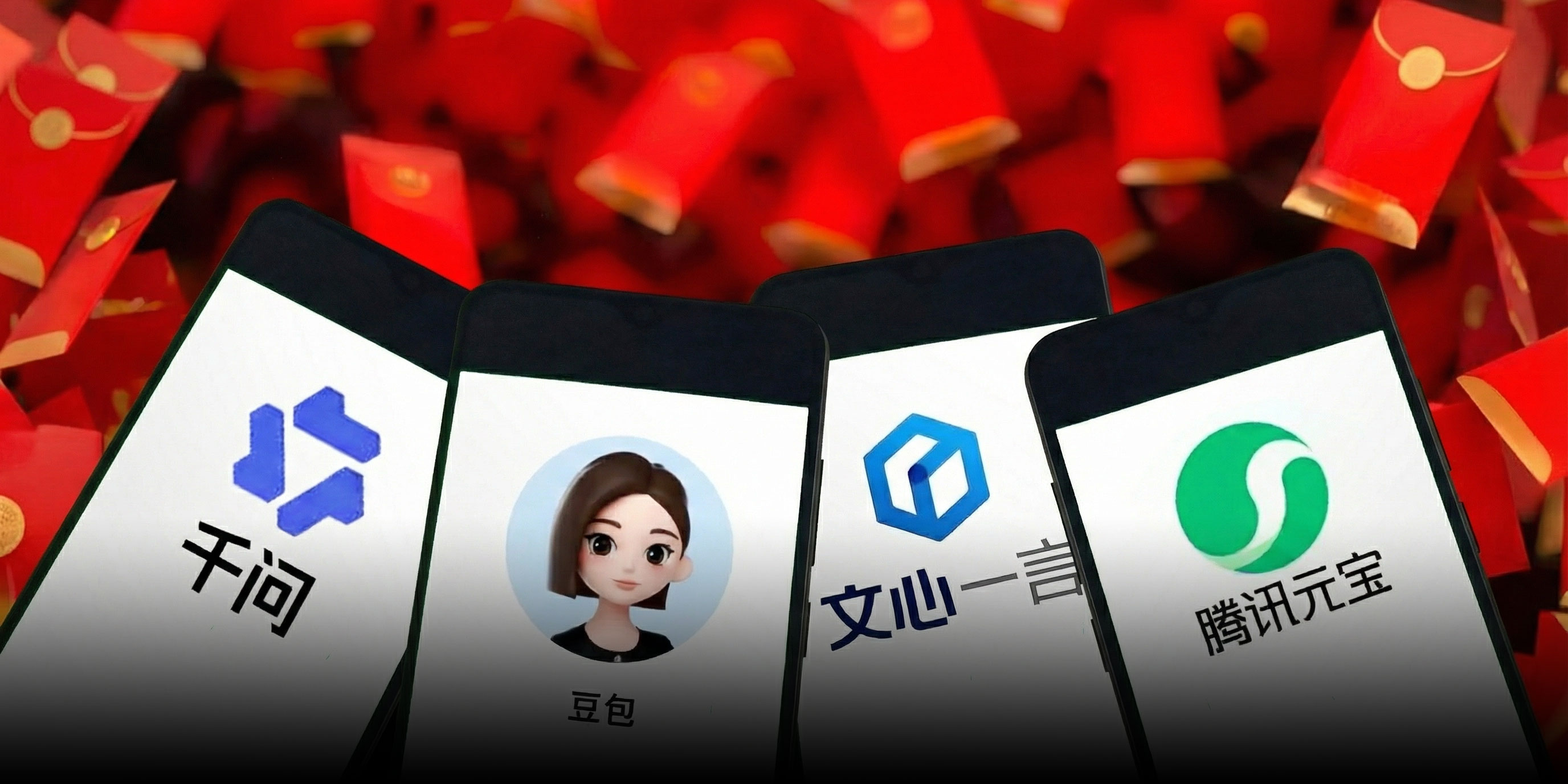
China’s tech giants are using Chinese New Year red envelopes to promote their AI assistants, flooding the market with billions of yuan in subsidies that have crashed servers, clogged messaging systems, and overwhelmed food service workers.
The subsidy campaign, dubbed “red envelope war” online, began last week, when social media and gaming giant Tencent rolled out a 1 billion yuan ($140 million) red envelope promotion through its Yuanbao AI assistant, followed by a 500 million yuan campaign from search giant Baidu’s Wenxin AI and a 3 billion yuan push by Alibaba’s Qwen Chatbot.
Red envelopes, cash gifts traditionally given to children during the Spring Festival, have long been digitized through platforms such as WeChat. This year, companies tied the custom directly to AI tools, reviving competition reminiscent of last summer’s food delivery price wars.
Tencent and Baidu offered digital cash for later use, while Alibaba distributed mass vouchers for bubble tea that users could redeem instantly by asking the Qwen AI to place an order at a shop.
The Alibaba campaign quickly spiraled out of control. On Feb. 6, Qwen processed more than 5 million orders within five hours, sending the app to the top of Apple’s domestic free app chart.
Photos and videos on social media showed receipt printers churning out long strips of unclaimed orders. Millions of orders rushed in at once, overwhelming the system and crashing servers. At physical milk tea shops, confused staff fielded nonstop questions from delivery riders asking about orders.
Sixth Tone spoke with five milk tea shop employees working during the campaign. All described similar scenes, using phrases such as “so tired I want to cry,” “questioning the meaning of life,” and “completely caught off guard.”
“The stacks of milk tea cups waiting to be processed were taller than adults,” Sally Chen, an 18-year-old part-time worker at a Chagee, one of China’s best-known milk tea chains, in southern Guangdong province, told Sixth Tone.
Her entire shift was spent heating drinks and sealing cups, with no time to rest. “I even deliberately drank less water from the morning on just to avoid going to the bathroom,” she said, adding that she resigned the next day — just after three days on the job — due to the pressure.
On Feb. 6, WeChat blocked the campaign’s shareable voucher link, disabling the invitation text from being copied. In an official statement, WeChat said the campaign had disrupted its ecosystem, degraded user experience, and crossed into harassment.
Qwen announced Feb. 7 on microblogging platform Weibo that its red envelope campaign would be extended through February, after orders exceeded 10 million within just nine hours of launch.
Editor: Marianne Gunnarsson.
(Header image: VCG)