Why China’s Young Urbanites Are Ditching Cities for Villages
After graduating with a degree in art design from Beijing Jiaotong University, most would have expected Li Zezhou to set his sights on a career in a big city. Instead, he returned to the forests and fields he’d known as a child.
In early 2024, he and a friend set up a design studio in a rented two-story building in Bishan, an ancient village in China’s eastern Anhui province. They called it Slime Club, seeing slime molds’ ability to stretch outward and link with other organisms as a metaphor for the kind of collaboration they hoped to achieve among young graduates.
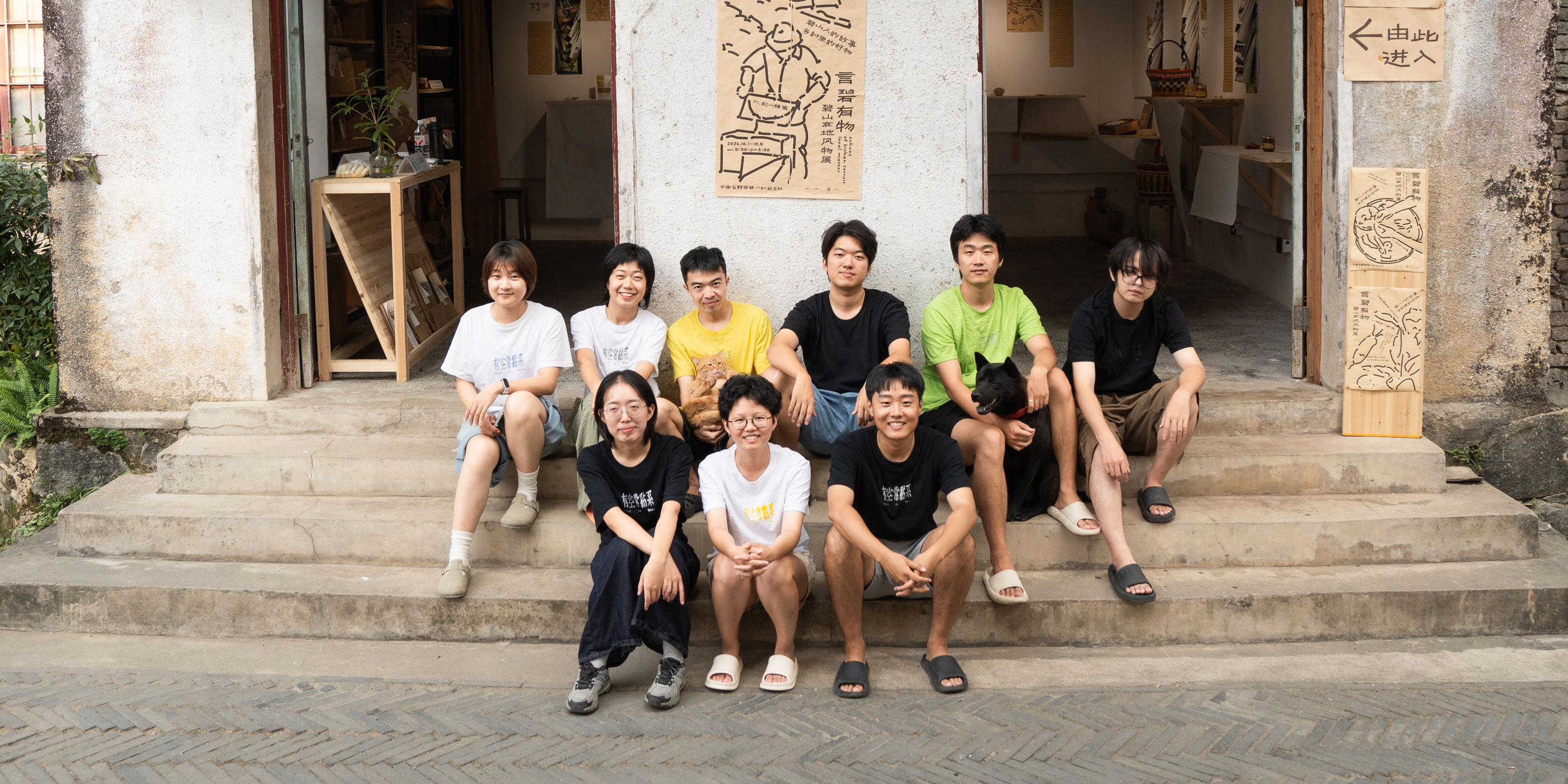
Since then, the collective has transformed its mission to help the local community, swelling from four permanent staff to 11, along with a host of contributors. Most arrive in the village intending on just a brief stay, but few ever leave.
Li and his colleagues, as well as digital nomads nationwide, are among a growing number of young Chinese people who are swapping cities for the countryside, as they seek to build a deeper connection with the land beneath their feet.
At Slime Club, most workers come from design backgrounds, although some studied archaeology and sociology. All were looking for an “escape” from urban life — clocking in and out, rigid hierarchies, performance reviews, and endless rush-hour traffic.
Liu Zhuore joined the full-time staff at Slime Club in September after finding herself unsuited to the corporate world. While studying sociology at the University of Hong Kong, she had internships in Hong Kong and Shenzhen, just over the border in Guangdong province. Yet whatever the firm, every day was the same.
At 9 a.m., an elevator would spill Liu into the corridor of a sprawling office building, and she’d drift toward her small cubicle to begin the daily grind. “There were these giant windows, but they barely opened a crack,” the 24-year-old says, recalling a sense of oppression.
After graduation, she spent three months as an intern in the eastern metropolis of Shanghai. The scenery changed, but her “box-like” existence didn’t. At some point, she gradually felt herself being called back to the countryside.
Liu grew up in a village in the central Henan province, yet she was hesitant when she applied for the job at Slime Club, as her peers would have considered leaving stable employment a huge risk. But after relocating to Bishan, she soon rediscovered the joys of rural life — sunlight pouring into the courtyards of traditional homes, lush greenery, and being able to climb a mountain to handpick osmanthus blossoms. She describes it as “pleasure felt throughout the body.”
Village people
Studio founder Li first had the idea of creating a youth-led rural organization while at university. “In some eco-villages in northern Europe and Japan, I saw that groups of young people are rebuilding supply chains and driving rural development,” he says.
After graduating, he traveled to rural areas across China to visit and experience various communities of young people and digital nomads, yet none lived up to his expectations. He found that mobility was extremely high — people were staying just a short time, never really engaging in rural life or with the locals.
The community Li hoped to build would not merely provide a “flexible office” free of pressure and hierarchy but also be part of village life, doing tangible work and laying down roots.
For the first six months after establishing Slime Club, the studio took on projects for city-based clients. Realizing that he was still part of the rat race, just in a different location, Li gathered his colleagues, and together they decided to transform the business into the organization he had envisioned. They rented a large guesthouse with 15 rooms, creating a shared space for living and working, which Li hoped would attract more like-minded individuals.
The goal is to invest in the community, such as by providing work opportunities for residents and helping promote local agricultural products. For example, in September 2024, a design team was assigned to build a brand for Bishan goods. During a break, Li points to a poster for kudzu root powder and says, “We designed that. It significantly boosted sales for an elderly woman in the village who makes it by hand.”
On Oct. 1, Slime Club held an exhibition at the guesthouse to showcase Bishan products and culture during China’s National Day holiday (Editor’s note: The village is part of Huangshan and, like the city’s other historic villages, can receive hundreds of thousands of tourists during annual holidays) to introduce “high-quality goods hidden deep in the mountains” to a wider audience. After months of planning, products including wild honey, chili sauce, osmanthus rice wine, dried radish, and mooncakes were displayed with detailed descriptions and in distinctive packaging under the newly devised “Dear, Dear” brand.
In the run-up to the show, Liu went on field trips to the mountains to meet artisans and farmers, including one man who had taught himself beekeeping because a doctor had recommended that honey was good for his sick wife. He now manages 10 hives.
The villager was happy to sell his honey to Slime Club at a favorable price, as he felt the studio was “doing good for the countryside,” Liu says.
The guesthouse’s owner, known as “Uncle Xia,” also believes that the studio has developed good relationships with the locals. “Few young people who grew up here have stayed — they’ve all gone out to work,” he says, his matter-of-fact tone that suggests this is just the accepted natural order. It’s tough to make a living in traditional agriculture in the village: for example, after deducting labor costs, cultivating 1 hectare of rice yields only about 800 yuan ($115) a year.
Li hopes that by making a deep, personal connection with the countryside, he can explore a path toward bridging the rural-urban divide. “Since we’ve chosen to stay, we truly hope to be able to do something for the village,” he says. “We can’t rush things. We want to do something sustainable, not a one-off performance that blows through like a gust of wind.”
Yao Jianhua, a professor in the School of Journalism at Shanghai’s Fudan University, believes that Slime Club and other young people are having an “immeasurable impact” on China’s rural revitalization, especially in terms of “cultural empowerment.” Drawing on their understanding of the aesthetics that appeal to their generation, they are using digital channels to market local products to a wide variety of consumers.
Tangible outcomes
For Li, Slime Club is a life experiment — no fixed script, no set outcome, but a clear sense of direction. Work is guided purely by personal interest, “which is far more tangible than chasing the corporate world’s key performance indicators,” he says.
In his ambitious 10-year development plan, Li first aims to attract more young people willing to stay long term, including talent from the architecture and landscape industries, with a view to taking on government renovation projects in Bishan. Then he hopes to forge links with youth communities nationwide, fostering mutual empowerment.
The later stages focus on strengthening Slime Club’s financial sustainability and establishing a “local academy” distinct from urban education, allowing children to break free of excessive competition.
Facing stiff challenges in terms of funding, personnel, and getting villagers to buy into his vision, Li knows that great patience will be required. “We’ll take it one step at a time,” he says. “First, we just need to get this going.”
Yao also feels that the influx of educated youth into the Chinese countryside is a two-way street — while government investment provides fertile ground and funding for fresh ideas, spending by young people on food and accommodation is helping drive rural economies.
“As well as meeting their own need for a livelihood,” he explains, “they are collaborating and negotiating with local governments and village communities, achieving a win-win outcome of personal fulfillment and rural development.”
Reported by Zhang Siyuan and Zhu Yawen.
A version of this article originally appeared in Original (Jiefang Daily). It has been translated and edited for brevity and clarity, and is republished here with permission.
Translator: Sophia Charles; contributions: Bai Suran; editors: Wang Juyi and Hao Qibao.
(Header image: Liu Zhuore (second from left, back row) and Li Zezhou (in yellow), and other Slime Club members pose in Bishan village, Anhui province, October 2025. Courtesy of the interviewees)