China Startup Starts Selling Spaceflights at $430,000 a Seat
From film stars and tech executives to poets and actors, more than 20 high-profile Chinese figures have reserved seats on what could become China’s first commercial spaceflight.
Beijing-based startup Interstellor Human Spaceflight Technology has begun advance ticket sales, pricing seats at 3 million yuan ($430,800) each, with a 10% deposit required to secure a reservation. The price is far below the roughly $50 million charged for comparable trips by Elon Musk’s SpaceX.
The company aims to complete its first crewed suborbital mission by 2028, the company announced Thursday.
The announcement comes as China ramps up support for its commercial space sector. In 2025, the China National Space Administration released a two-year action plan pledging expanded access to rocket testing facilities and international cooperation. Aerospace is also listed as a strategic section in China’s 15th Five-Year Plan.
Among those who have reserved seats are Qiu Heng, chief marketing officer of robotics startup AgiBot, Li Licheng, an academician of the Chinese Academy of Engineering, poet Lin Xiaoyan, and actor Huang Jingyu.
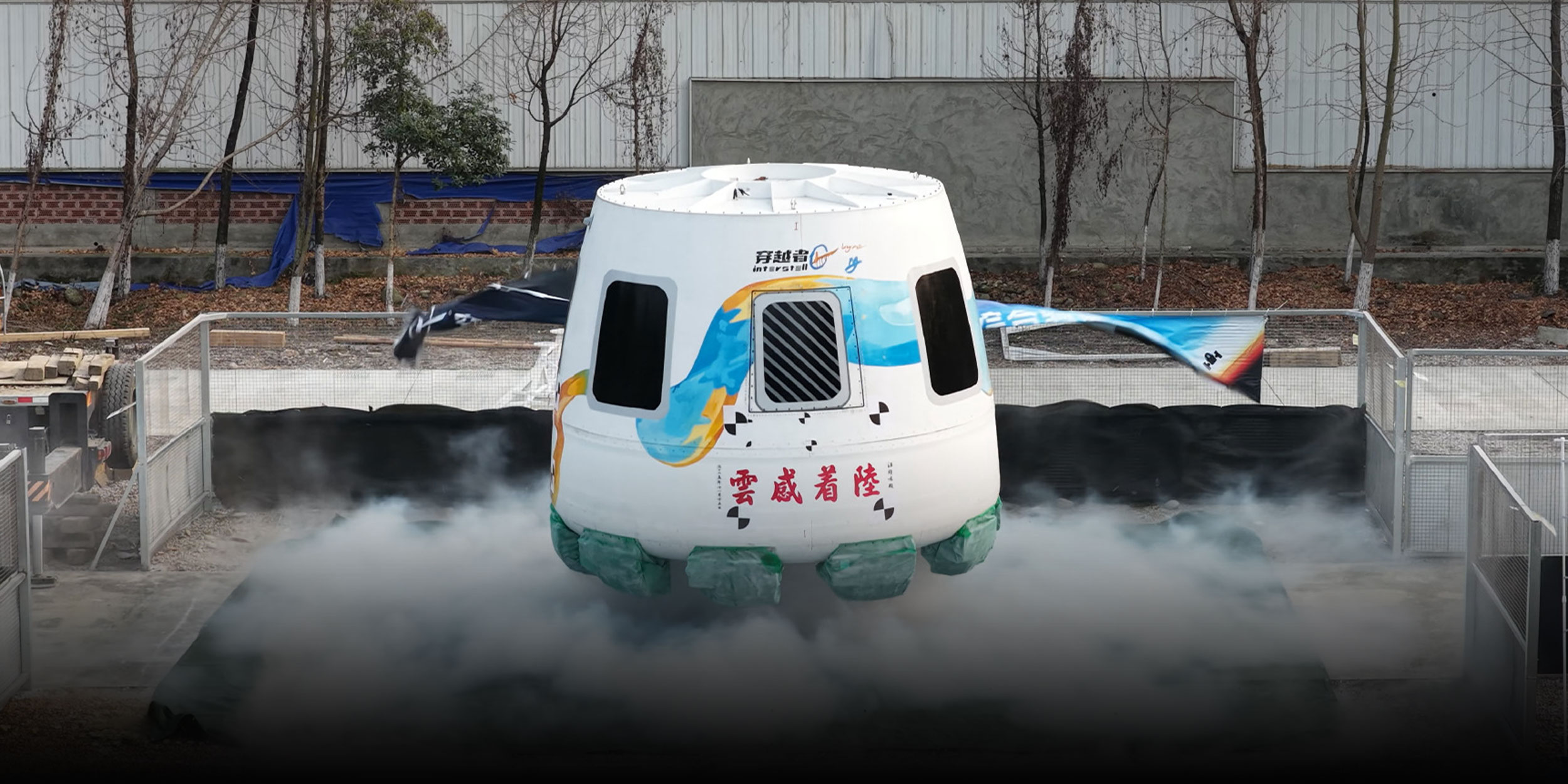
The mission would be carried by the company’s CYZ1 spacecraft, a six-seat vehicle weighing about eight tons and offering roughly 25 cubic meters of cabin space.
The spacecraft would be launched atop a carrier rocket, separate at an altitude of about 70 kilometers, and then cross the Kármán Line — widely accepted as the boundary between Earth’s atmosphere and outer space — and return to Earth via a parachute-assisted landing.
“The world always needs a few people who are a little crazy,” said Xie Meng, CEO of Guangzhou-based retail firm Grandview Group and one of the future passengers, in a promotional video released by InterstellOr on microblogging platform Weibo.
Founded in 2023, InterstellOr focuses on reusable crewed spacecraft technology and has raised millions of yuan from investors. Lei Shiqing, the company’s founder and CEO, said it plans to conduct two uncrewed test flights before attempting a crewed mission and has already carried out simulated landing tests.
While some users online welcomed the prospect of space tourism, experts cautioned that key technical hurdles remain, including full testing of the landing parachute system and integration with suitable launch vehicles.
Other Chinese companies are also developing suborbital travel programs. In October 2024, Deep Blue Aerospace sold two suborbital tickets during a livestream, each requiring a 50,000-yuan deposit and offered at a promotional price of 1 million yuan. The company has said it aims to conduct its first flight in 2027.
Editor: Marianne Gunnarsson.
(Header image: The CYZ1 spacecraft. From @interstellOr穿越者 on Weibo)