The Music Teacher Who Rewrote the Rules of Chinese Pop
In early 20th-century Shanghai, jazz was made by composers, performers, and bandleaders from across Asia and beyond. This is the first article in a four-part series tracing how that sound took shape, and who made it matter.
When the iconic Chinese writer Lu Xun first heard “Drizzle” — released in 1927 and often hailed as China’s first pop song — he likened it to “a cat being strangled.”
His peers in the country’s elite were even harsher, dismissing it as little more than pornography. But as in so many intellectual clashes of 20th-century China, the critics lost out. “Drizzle” became a sensation, an epoch-defining hit that changed Chinese music forever.
Its composer, Li Jinhui, was no less polarizing. Prolific in his prime in the 1920s and ’30s, he loomed over Shanghai’s music scene like a Chinese George Gershwin.
He was also a lightning rod for controversy, churning out hits adored by the masses but reviled by critics as hypersexual “yellow music” with no political or moral message. Even decades later, the renowned literature scholar Ou-fan Lee echoed the old gossip: that Li wrote “lascivious” songs and trained his singers to striptease.
The truth was more complicated. Li’s songs rarely touched politics — making him an easy target in an era obsessed with it. But he was never apolitical.
Without any formal musical training, he built China’s first jazz band and a song-and-dance troupe, defying gender norms while launching the country’s earliest music and film superstars. His innovations laid the foundations for modern Chinese pop — proof that, even with Western influences, Shanghai could make jazz its own.
Born in 1891 into a respected family in the central Chinese province of Hunan, Li was fascinated with Chinese folk music from an early age. He later recalled a childhood filled with the sounds of the stringed guqin, the hum of Kun opera, and the ritual music of Taoism. At school, he also encountered the basics of Western music theory, even learning to play an old-fashioned pump organ.
Li’s tastes were shaped by these early experiences of grassroots music. Despite his passion, he never received any systematic training, something nearly impossible in China at the time. The country’s first music conservatory would not be founded until 1927. Aspiring musicians had to learn as apprentices to master performers, or else seek training abroad.
By 1914, Li had picked up enough to begin teaching music in Hunan, before moving to Beijing and later to Shanghai in 1921. There, he began reimagining old folk tunes with new lyrics in vernacular Chinese that anyone could understand.
The choice of vernacular Chinese marked Li as a reformer. At the time, intellectuals nationwide were striving to modernize China’s language amid colonial encroachment. Thinkers such as Lu Xun and Chinese Communist Party co-founder Chen Duxiu saw an urgent need to dismantle the old, feudal order and build a modern, educated society in its place. This “New Culture Movement” spanned everything from literature to hygiene, challenging ancient practices and pushing ordinary Chinese to embrace new ways of living.
Music, too, was seen as a means to cultivate aesthetic sensibilities and shape the spirit of the masses. But not every song was suited to nation-building: early 20th-century intellectuals favored Western classical music, seen as modern, refined, and elegant compared to the “crude” and “backward” folk tunes Li grew up with. Although beloved by the common people, who sang them in villages and in the alleys outside brothels, those songs carried the stigma of the old society.
Li disagreed. Although influenced by the New Culture Movement, he believed that true transformation would only take root through music that spoke to ordinary people. He called this pingmin yinyue: a music of the people, for the people. At the Music Society of Peking University, he urged that folk tunes, with their infectious melodies and deep emotional resonance, only needed fresh lyrics to become anthems of modern China.
Finding little support among the intellectual elite, Li set out to write those lyrics himself. Unlike musicians with formal conservatory training, Li was not bound by precedent, and his experiments broke from orthodoxy, sometimes to the point of startling his audiences. With no established models to follow, he began blending Chinese and Western instruments into novel arrangements, like playing the violin with a bow designed for the fiddle-like huqin. To make new styles accessible and engaging, especially for children, he began developing musical theater performances that fused melody, story, and movement.
From this vision sprang the legendary Bright Moon Song and Dance Troupe, the crucible of modern Chinese pop music. The troupe launched the careers of some of China’s most influential stars in music and film like Zhou Xuan and Wang Renmei, visionary composers Yan Zhexi and Chen Gexin, and even Nie Er, who would go on to write China’s national anthem.
Li’s irrepressible spirit soon drew him to jazz, which was sweeping through Shanghai in the 1920s thanks to Hollywood films, gramophone records, and the city’s cosmopolitan nightlife. In imported movies, actors swayed to jazz backdrops, while in ballrooms that sprang up across the city, big bands played irresistible dance tunes, many laced with jazz rhythms.
At the time, Li was studying all he could about music from around the world. He attended weekly symphony concerts at Shanghai’s Municipal Hall, listening to ensembles from Italy, the U.S., France, and Russia. “I believed Chinese music should be broad-minded and open, embracing popular music,” he later recalled.
By the 1930s, traces of jazz began to surface unmistakably in Li’s compositions. Take “Drizzle.” A 1928 recording of the song still drew on Chinese folk instruments and lyrical balladry. But by the time Li re-recorded the song in 1934, its new arrangement featured jazz-tinged accompaniment. The same evolution appears in the 1935 version of “Express Train,” whose brisk tempo and swing-like energy made it a favorite on Shanghai’s ballroom floors.
At the time, most jazz bands in the city were staffed by foreigners, mainly Filipinos, with a scattering of Americans and Russians. But Du Yuesheng, a powerful boss in the notorious Green Gang organization, wanted something different for his soon-to-open Yangtze Hotel ballroom.
He turned to Li, and the resulting “Breeze Dance Band” — the first all-Chinese jazz ensemble — marked another milestone in Chinese popular music, performing folk songs set to jazz-inflected dance tunes. Other ballrooms quickly followed suit, asking Li to recommend Chinese musicians and compose music for them to play.
To modern ears, Li’s music can sound a little light on substance. His engagement with jazz was largely superficial, lacking much of the genre’s deeper musical and cultural complexities. But it still carried a message. In 1930s China, jazz symbolized modernity, cosmopolitanism, and the allure of the West, making it the perfect vehicle for Li’s mission to translate modern culture into a language everyone could understand.
Commercially, the songs were massive hits. Li’s compositions became so popular that recording companies commissioned hundreds of new songs from him. He was essentially a genre unto himself, with his jazz-tinged shidaiqu, or “songs of the times,” spreading across China through films and records.
Outside the world of dance halls and movie theaters, however, Chinese intellectuals viewed Li’s music with skepticism. Like Shanghai itself, shidaiqu were associated with decadence, indulgence, and moral decay. While Li believed he was bridging cultures, many of his peers saw little distinction between jazz and the vulgar folk music of China’s past.
“Most people hadn’t studied music, but when they heard jazz, they immediately responded to its rhythm — they danced, they sang — its lyrics were simple, its melodies catchy,” Feng Zikai, a famed painter and advocate for aesthetic education, once remarked. “Inevitably, the popularization of art leads to ease and frivolity.”
To many intellectuals, jazz — like Chinese folk music — was too casual and too frivolous to serve the cause of national education or resistance. Some went further, accusing it of corrupting China’s national spirit. Little wonder, then, that Li’s fusion of the two met with intense criticism. As time wore on, he found himself under attack from all sides: composer He Luting called his work “obscene,” while musician Cheng Maoyun published a scathing piece titled “Why the Songs of Li Jinhui Must Be Banned.”
Cheng’s arguments seemed to carry the day: the ruling Nationalist government banned a number of Li’s songs and children’s musicals.
Even if Li’s “music for the people” was dismissed by fellow reformers, the songs were too popular to ever be fully suppressed. Today, shidaiqu is recognized as the first form of Chinese pop — and Li’s collaborators as the country’s earliest idols. Over the century that followed, his work influenced singers like Teresa Teng Li-chun, seeded some of Hong Kong’s earliest Cantopop, and eventually returned to the mainland, where it still echoes in clubs and on street corners popular with square dancers.
“New things, though not always good, are still more valuable than clinging to the old ones,” Li once wrote. “Not aiming for glory, and instead only hoping to avoid fault — this is a deceptive and dangerous saying that hinders true progress.”
From today’s vantage, one might argue that Li’s music lacked complexity. But it was precisely his lack of formal training that freed him to consider new possibilities. Li embraced what the elite scorned, and in doing so, created something that was both new and old, highbrow and lowbrow. Perhaps that’s why “Drizzle” — written almost a hundred years ago — is still beloved today, proof that his vision of music for the people was not only daring, but right.
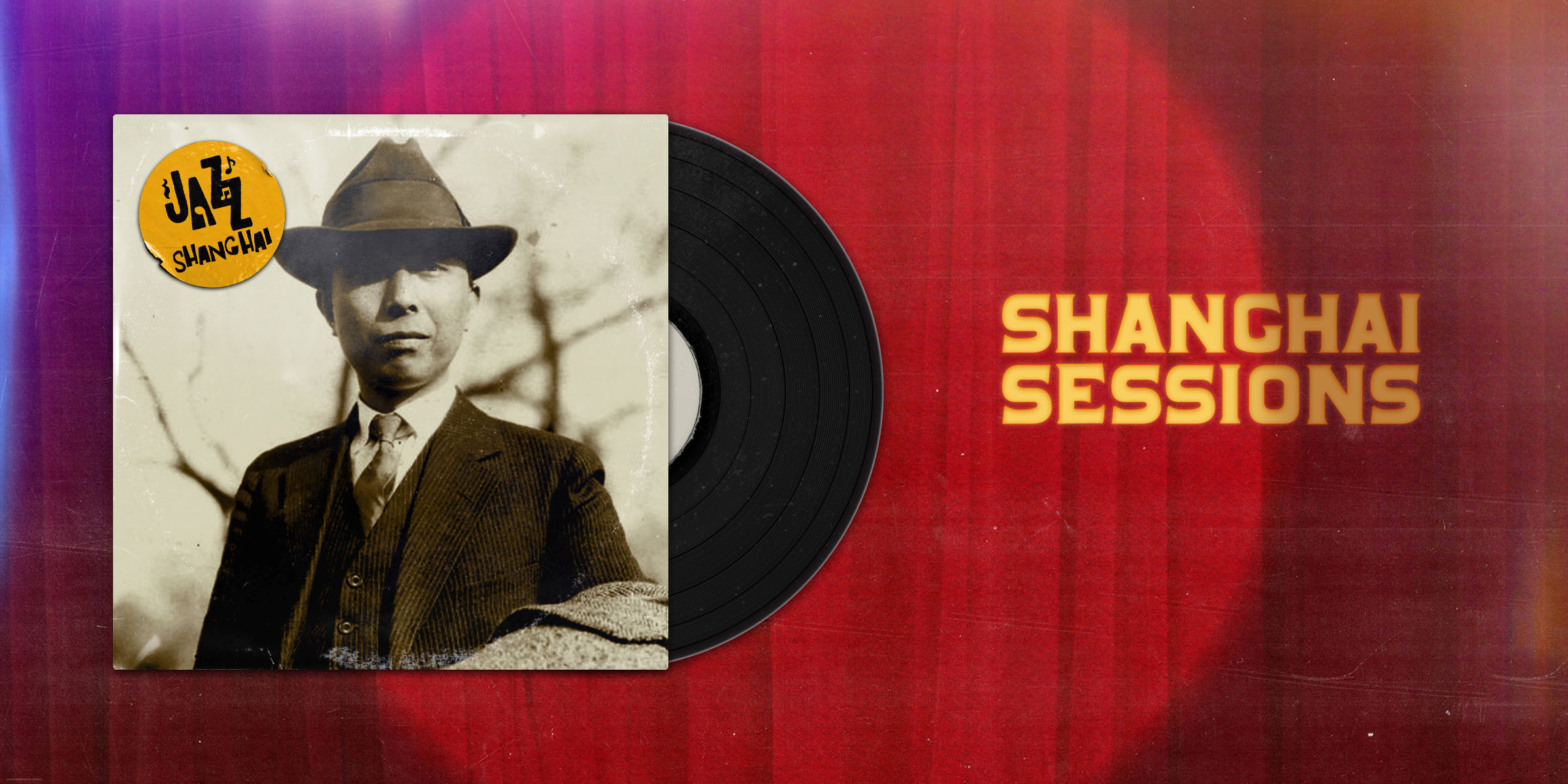
(Header image: Portrait of Li Jinhui. From the public domain, reedited by Sixth Tone)