The Archeological Menagerie: China Uncovers 3,000-Year-Old ‘Zoo’
Archeologists have uncovered what may be China’s oldest known collection of captive wild animals at a site in the central Henan province, where 3,000-year-old sacrificial pits contain the remains of big cats, Asian water buffalo and other species.
The discovery was announced Jan. 9 by researchers from the Chinese Academy of Social Sciences. The pits were uncovered at Yinxu, the last capital of the Shang dynasty (c. 1600–1046 B.C.), a site long known for its royal tombs, oracle bones and ritual artifacts.
Excavations conducted between 2023 and 2024 covered about 1,240 square meters and revealed 19 small and medium-sized sacrificial pits. From them, archeologists recovered large quantities of animal remains, including mammals such as deer, wolves, tigers, leopards, foxes, serows and wild boars, as well as birds including swans, cranes and geese.
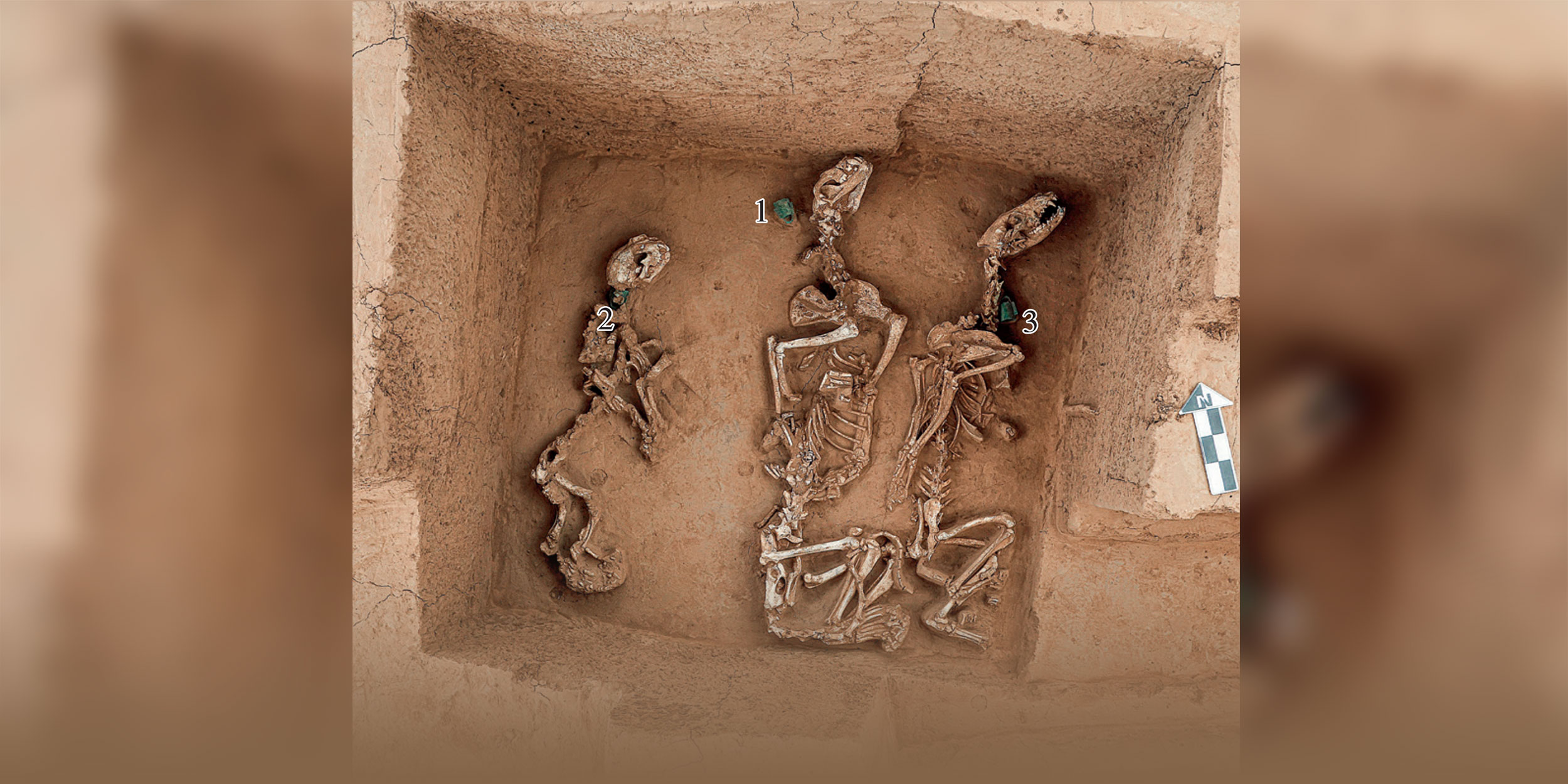
“What’s most unusual is that some of the animals were found with bronze bells hanging from their necks,” Niu Shishan, a CASS researcher who has worked at Yinxu for more than two decades, told domestic media.
A total of 29 bronze bells were recovered from the site. Niu said the presence of the bells suggests the animals were not hunted but kept alive as “exotic creatures” in dedicated enclosures controlled by the Shang king or other high-ranking elites.
“The concentration of wild animals and the standardized way they were handled point to a relatively well-developed system for acquiring, raising, and managing wild animals during the Shang dynasty,” Niu said.
He added that the diversity of species found at the site could also provide new material for studying climate and ecological conditions during the late Shang period.
Similar pits containing captive animals have been found at sites dating to the later Warring States period (475–221 BC). One such pit, believed to belong to the grandmother of Qin Shi Huang, China’s first emperor famed for the Terracotta Army, contained remains of an extinct species of gibbon, as well as leopards, Asiatic black bears, and lynxes.
Editor: Marianne Gunnarsson.
(Header image: A sacrificial pit filled with wild animal remains at Yinxu in Anyang, Henan province, with areas marked 1, 2 and 3 indicating bronze bells. Xinhua)