China’s Cliff Coffins: DNA Ties a 3,000-Year-Old Enigma to the Living
Scientists have uncovered the first genomic evidence that a minority group in southwestern China’s Yunnan province is directly descended from the ancient culture that built the mysterious “hanging coffins,” or coffins nailed to sheer cliffs.
The finding, published Nov. 20 in the journal Nature Communications, was led by researchers at the Kunming Institute of Zoology under the Chinese Academy of Sciences (CAS) and Fudan University in Shanghai.
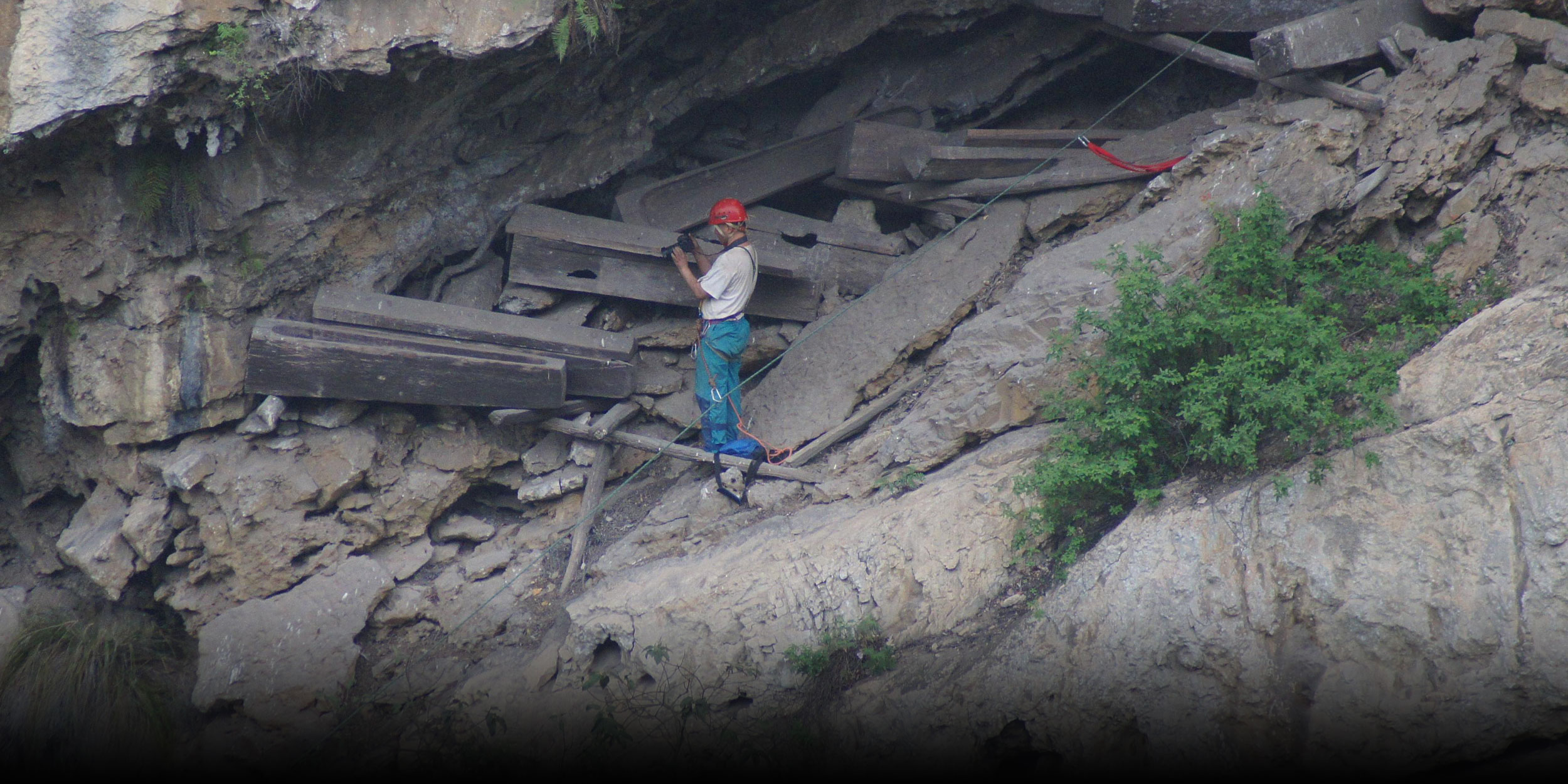
Ancient communities placed coffins on wooden stakes hammered into cliff faces high above river valleys, sometimes propping up one end of the coffins inside caves. Exactly how they carried out these feats — and why — remains uncertain.
Chinese historical texts link the practice to the Bo, a minority group that lived in the country’s southwest before disappearing from records by the Ming dynasty (1368-1644).
Today, about 6,800 people in Qiubei County, Yunnan, still call themselves Bo, and are officially classified as a branch of the Yi ethnic group.
The modern Bo have preserved a funerary tradition reminiscent of the cliff burials: the “soul-cave burial,” in which clan elders carve a copper token representing their soul, seal it in a wooden bucket known as an “ancestor coffin,” and hide it deep inside a natural cave known only to them.
Since the early 2000s, scientists have hypothesized a genetic link between today’s Bo people and the ancient hanging-coffin practitioners, but limited technology and the difficulty of extracting DNA from the remains left the theory unproven.
The new study analyzed 11 ancient genomes from China, four from northern Thailand with support from Thai scientists, and whole genomes from 30 modern Bo individuals.
Results indicate that about 43% to 79% of the modern Bo genome can be traced directly to the ancient hanging-coffin practitioners from Yunnan.
The study also suggests that the more than 3,000-year-old tradition originated in eastern China and later spread into parts of Southeast Asia and the Pacific.
Archaeological records show that the oldest known hanging-coffin site, dating back 3,600 years, lies in the Wuyi Mountains of the eastern Fujian province. The new genomic analysis further confirms the modern Bo’s genetic ties to that region.
Together with a 2020 study led by the same CAS institute, which found that human remains from hanging coffins in China and Thailand share genetic similarities, the new findings help map how the tradition spread within China and beyond.
The 2020 study said the tradition’s spread within China was likely driven by migration, while its transmission to Thailand may have occurred through cultural assimilation, meaning the ritual traveled but people didn’t.
Looking ahead, the researchers plan to collect more samples from early hanging-coffin sites in Fujian, as well as from Southeast Asia and the Pacific, to build an integrated database linking funerary practices, population genetics, and cultural transmission across regions.
Editor: Marianne Gunnarsson.
(Header image: Hanging coffins found in Zhaotong, Yunnan province. Xinhua)