No Free Lunch: China’s Takeout War Wraps Up Without a Winner
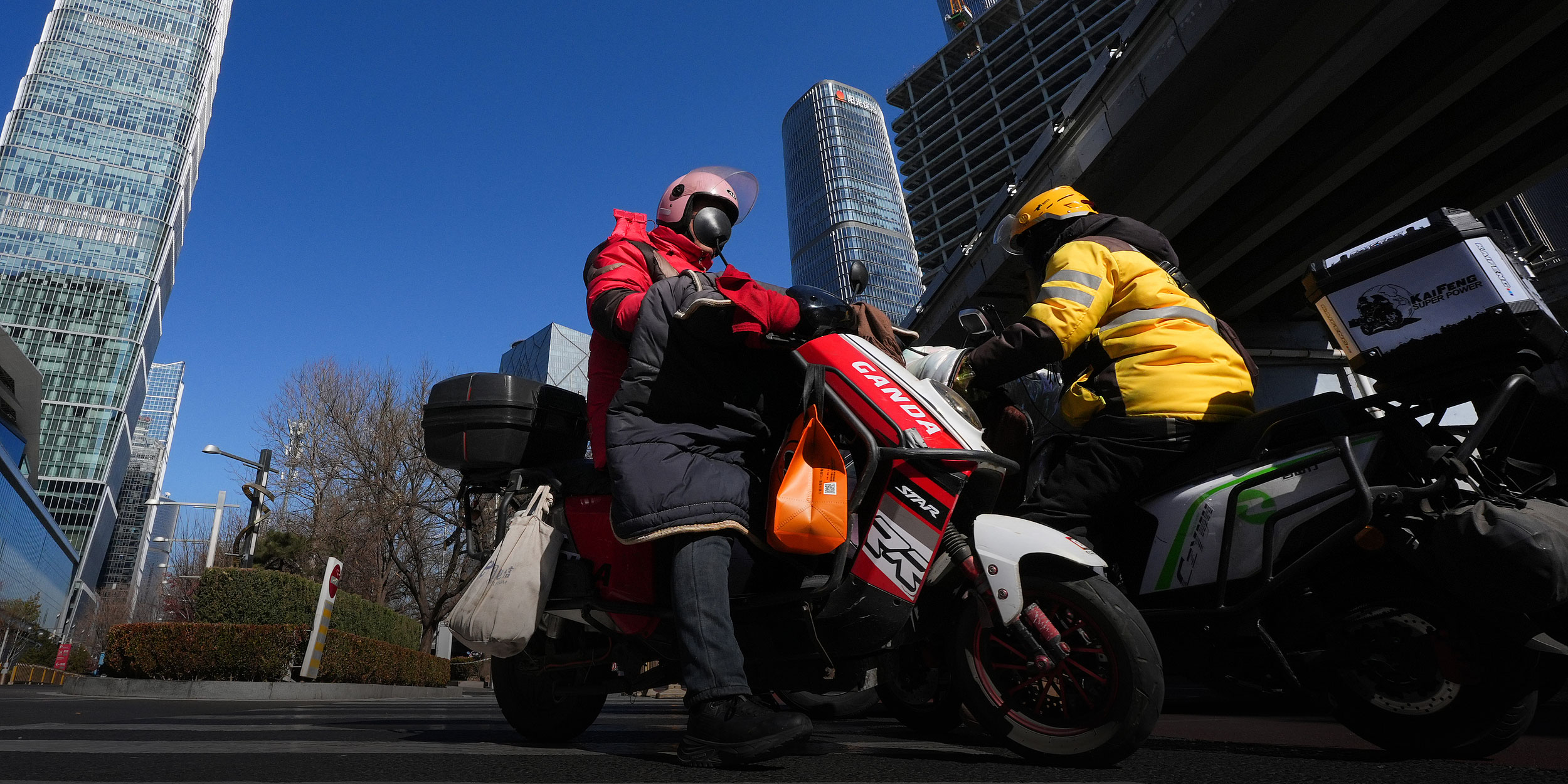
For much of this year, China’s three food delivery giants waged an aggressive subsidy war, pouring billions into deep discounts and seasonal promotions to seize market share and lure delivery riders.
But last week, all three companies — Meituan, Ele.me (now Taobao Flash), and JD.com — disclosed steep third-quarter losses, confirming that months of heavy subsidies have taken a steep financial toll.
While Meituan swung to a 16-billion-yuan ($2.3 billion) loss — its biggest since listing — and Alibaba, the parent company of Ele.me, saw its earnings fall by half, JD.com’s new business arm, including its food delivery service, more than doubled its revenue but still lost nearly 16 billion yuan, the companies’ quarterly reports show.
Shanghai-based media outlet The Paper estimated that Meituan, Alibaba, and JD.com together spent nearly 80 billion yuan in subsidies and marketing this year as they fought for dominance in food delivery and instant retail.
Competition between the three platforms intensified after e-commerce giant JD.com began recruiting restaurants and delivery riders in February and formally entered the food delivery market in April.
Throughout the summer, platforms rolled out waves of coupons and promotions — featuring 0 to 1 yuan coffees and milk teas — boosting order volumes but not revenue.
According to a recent report by JPMorgan, Meituan now handles around 71 million daily orders — roughly 50% of the take-out market in China — followed by Alibaba at 42% and JD.com at 8%.
Top executives indicate that they are ready to shift course. Alibaba CEO Wu Yongming said investment in its Taobao Flash unit would likely shrink significantly next quarter. Meituan CEO Wang Xing told analysts, “We will make the necessary investments to maintain our leading position, but we will not engage in a price war.”
JD.com has also dialed back its food delivery push, prompting speculation that the company is slowing its expansion. CEO Xu Ran said food delivery remains a long-term strategy, but emphasized the need for healthy development and sustainable growth.
A recent study led by Zhang Jun, dean of the School of Economics at Fudan University in Shanghai, examined over 40,000 cases and found that large-scale subsidies failed to drive sustainable revenue and increasingly cannibalized dine-in business, leaving merchants with more orders but no increase in income.
Editor: Marianne Gunnarsson.
(Header image: VCG)