Why Chinese Culinary Customs Aren’t Weird, but Smart
When, in 1840, Great Britain attacked China during the Opium War, it began a smear campaign circulating propaganda stories of Chinese people eating cats, dogs, rats, snakes, and other uncommon animals.
A prejudice about Chinese eating habits was born, one that endures to this day. See, for example, a test given to American middle schoolers a few years ago that claimed it is “normal in parts of China to eat cats and dogs.”
The stereotype that Chinese people will eat everything and anything is based on a misconception. Chinese culinary culture is better described as “making the best use of everything.”
This approach to food developed out of China’s long history of famines. Historically, a lack of food was the norm rather than the exception in the country, due to its large population, frequent floods, and many wars. In addition, ordinary people were saddled with heavy tax burdens to the government, and even the more prosperous southern region had to transport grain north by canal. China might be prosperous now, but older generations alive today still remember the rumbling empty stomachs of their childhood.
Against this backdrop, Chinese people developed an aversion to wasting anything edible as a kind of survival instinct. Take for example the lines from a Tang dynasty (618–907) poem: “Who realizes that the food in the food bowl, every last morsel of it, is bought with such toil?” It’s a poem children still learn in school.
In order to help ordinary people survive during times of famine, imperial governments published several editions of the “Jiuhuang Bencao” — a treatise on wild food plants that can be eaten in emergencies. These classic works were more than medical textbooks, serving as both a survival guide and a dietary manual, offering details on how various plant-based raw materials could be safely consumed.
The book included even the parts of plants normally discarded — such as bamboo leaves and bamboo flowers — as well as bitter-tasting or slightly toxic plants. It presented various techniques and methods for removing harmful substances through cooking: For instance, the bitterness and toxicity in certain plants can be removed by boiling them for a long time, allowing people to eat plants and their byproducts normally considered “inedible.”
During times of extreme famine in China, people might consult the “Jiuhuang Bencao” and make some Guanyin tofu from the leaves of the Japanese premna, a plant known in Chinese as “Guanyin wood.” When the pectin contained in the leaves is mixed with plant ash that contains alkaline substances, the result is a tofu-like gelatinous substance. What was once a meal for times of crisis has today become a delicacy.
This same approach is also applied to meat. When it comes to animals, Chinese people not only consume the “prized” cuts such as chicken breasts and fish fillets, but also make full use of “offcuts” like chicken feet, organs, and heads. Using techniques such as marinating and braising, they produce delicious dishes from chicken feet, and by stir-frying and stewing, the offal is turned into a tasty treat.
Arguably, nose-to-tail eating is an advanced and (relatively) environmentally friendly approach. Take chicken, for example. Most people in the West only consider eating the breast, legs, and wings, while the rest goes in the bin. In China, however, parts of the chicken such as its blood, gizzard, heart, liver, intestines, and feet, can all be turned into delicious dishes after being thoroughly cleaned, prepared, and cooked using unique methods.
While Western government awareness programs urging people to eat a healthy diet are relatively recent inventions, Chinese diets that emphasize covering all major food groups go back to early imperial times. The “Huangdi Neijing” (“Inner Canon of the Yellow Emperor”), compiled over two millennia ago and promoted by successive dynasties and scholarly communities throughout Chinese history, states that “The five grains nourish and the five animals provide benefits,” emphasizing a diet that is based around grains and supplemented by animal-based products — another expression of the “making the best use of everything” ideal.
While there are examples of Chinese people eating rare and uncommon animals, such cases are rare and receive far more attention than they should. Just as the celebrated 20th-century author Buwei Yang Chao pointed out in her book “How to Cook and Eat in Chinese,” the vast majority of Chinese cuisine does not pursue exotic ingredients. Instead, the average Chinese meal is made with simple cooking techniques such as quick stir-frying to combine various ingredients.
While famine is fortunately no longer something that people worry about in China today, many of the old dietary habits it helped develop still persist. Chinese home-cooked meals are still largely plant-based, and little is thrown away.
With China’s remarkably fast economic rise, adherence to these traditional culinary norms has faded somewhat. Lavish restaurant meals once only affordable to the wealthy few are now weekly occasions for the country’s sizable middle class.
The government’s Clean Plate campaign, initiated in 2013, and the Anti-Food Waste Law of 2021 both demonstrate that the Chinese ideal of respecting food has not diminished, but does now require some reminding. China’s growing ranks of people dealing with obesity, hypertension, and other diet-related illnesses would also be wise to remember the plant-based diets of traditional Chinese cuisine.
Such a dietary ideal would even be a good menu choice for people outside of China. Meals heavy on meat are not just unhealthy, but also have a far greater carbon footprint than the mostly plant-based dishes found on the dinner tables in millions of Chinese homes today.
In my opinion, the approach of “making the best use of everything” when it comes to food that is common in China should not only not be ridiculed but also be promoted all over the world. At a time when the world is facing increasing food crises and health challenges, China’s culinary culture provides clear guidance for eating healthily and sustainably.
Hopefully, the next time that I tuck into a plate of lemon chicken feet, my foreign friends won’t be surprised.
Translator: David Ball.
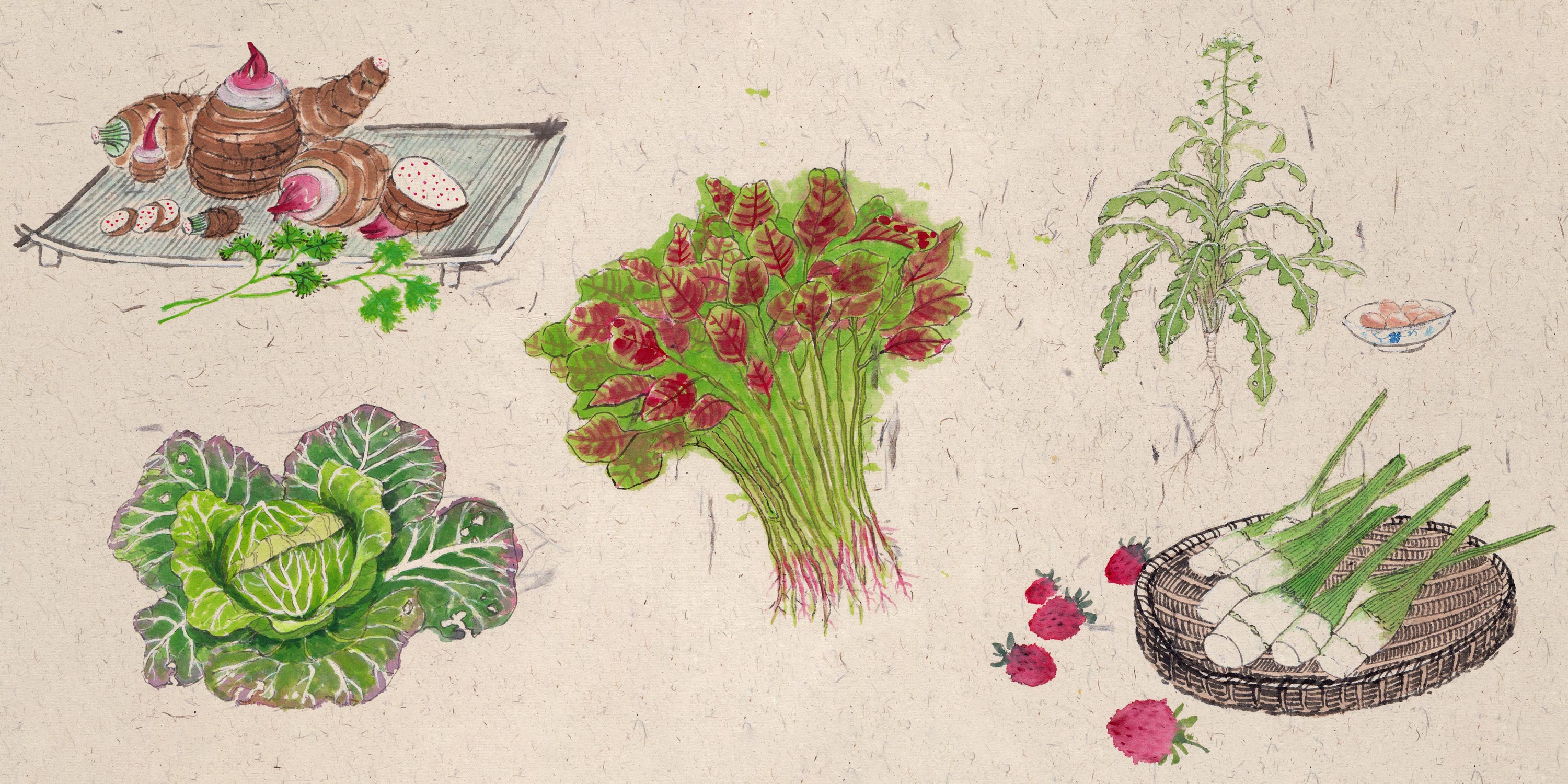
(Header image: Visuals from Shijue Focus/VCG, reedited by Sixth Tone)