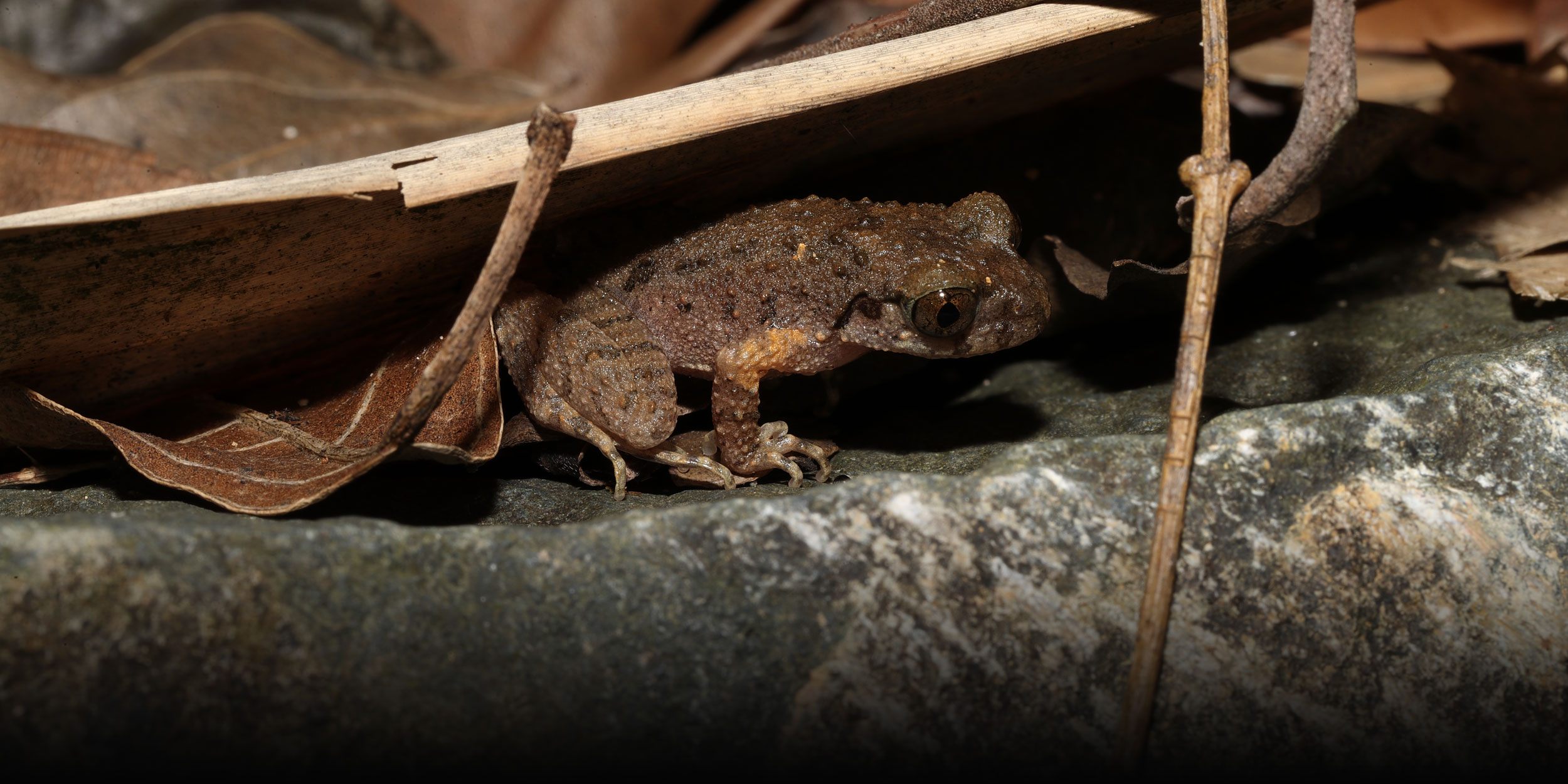
Leapfrogging Ahead: Chinese Scientists Discover New Frog Species
A new frog species has been discovered in the city of Foshan in southern China’s Guangdong province, highlighting the importance of preserving diverse habitats in urban environments.
The discovery was reported in an article published Tuesday in the peer-reviewed science journal ZooKeys by scientists from the Guangdong Polytechnic of Environmental Protection Engineering and the Guangdong Provincial Academy of Environmental Science.
The researchers named the species Leptobrachella kungfu to pay homage to Foshan’s rich cultural heritage as China’s cradle of kung fu. The city is the ancestral home of martial arts legends such as Wong Feihung, Ip Man, and Bruce Lee.
According to Lin Shishi, leader of the research team, the discovery underscores the ecological value of the diverse microhabitats within large urban clusters. “Even though these patches of natural habitat are small, they play a crucial role in protecting unique species and should be a core focus of urban ecosystem planning,” Lin told domestic media.
The species was first discovered in a stream-laden area near Foshan’s Laoxiang Mountain and has been found to mainly inhabit hilly areas in the western part of the Greater Bay Area. The researchers collected 110 frogs spanning 96 species before conducting genetic analyses and physical assessments to isolate the new species.
L. kungfu is characterized by its small body size, a distinctive black stripe beside its eyes, slightly webbed toes, a white belly, and a lack of ridges on its back.
“These species currently have very limited distribution ranges,” the team wrote in its article, adding, “Further studies on their distribution patterns, historical dispersal routes, ecological niches, and adaptability are worthy of in-depth attention.”
The team also compiled a key to all Leptobrachella species recorded in Guangdong, providing precise morphological distinctions for each. Leptobrachella is one of the most diverse frog genera, comprising 110 species that mainly inhabit Southeast Asia.
Between 2022 and 2024, researchers in Guangdong identified 333 new wildlife species, averaging one every three days. As of 2025, the province has documented 8,186 higher plant species, 1,052 terrestrial vertebrates, and more than 12,000 insects and related groups, forming a multidimensional biodiversity profile of the region.
“Guangdong, especially the Pearl River Delta, has been at the forefront of (China’s) biodiversity awareness,” Lin said. “By integrating bird-attracting and fruit-bearing plants into green landscapes, we enrich biodiversity while creating sustainable income to support our fieldwork. It’s a way for scientific research to feed back into both conservation and livelihood.”
The team aims to explore Guangdong’s coastal mountain ranges in search of more undiscovered species.
“There must be countless discoveries hidden there,” Lin said. “Studying a mountain’s biodiversity can take decades. It’s a tough, lifelong pursuit — but it’s the work I’ve chosen,” Lin told domestic media. “Some of our team may move on, others will join, but like our predecessors, we’ll keep pushing forward.”
Editor: Marianne Gunnarsson.
(Header image: Leptobrachella kungfu, a new frog species discovered in Foshan, Guangdong province, April 29, 2025. Xinhua)