The Chinese College Student Who Took on Annoying Elevator Ads
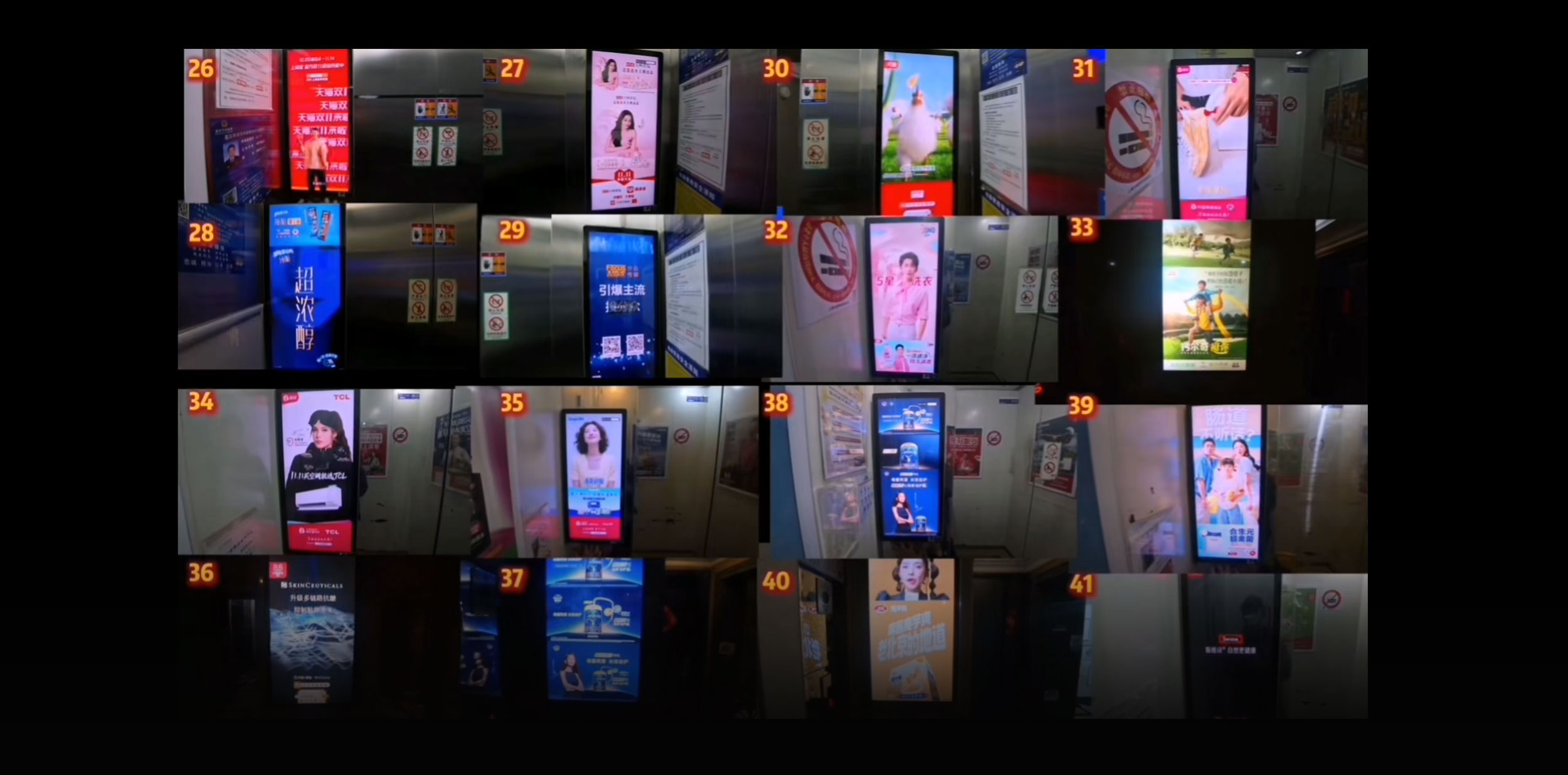
Last month, a college junior walked into the elevators of a series of Shanghai apartment buildings and shut down more than 100 elevator advertising screens after gaining access to their control panels by means of a “universal key” — one that opens most locks — purchased online for 10 yuan ($1.40).
The student, Kong Junyou, filmed his five-day-long protest and posted the video online on multiple platforms, where it accumulated thousands of views and likes. The video was later shadow banned by the platforms, though Kong later reuploaded it.
Kong aimed to protest the intrusive noise from the displays, which blare short commercials looping throughout the day in the small enclosed spaces. The droning of ads has turned once-quiet rides into noisy commercial spaces that disturb residents’ peace.
In a separate post on lifestyle platform Xiaohongshu, also known as RedNote, after the original video was suppressed, Kong wrote: “My action aims to spark a revolution in the advertising industry. Ads that rely on brainwashing shouldn’t be considered good advertising.”
Kong further explained in an interview with Sixth Tone that his actions were inspired by a college assignment, in which the professor of his class titled New Media Marketing had challenged them to “make an original video go viral.”
“This was actually coursework for one of my classes, presented in the form of performance art,” Kong said, adding, “The charm of performance art lies in evoking resonance, not destruction.”
The ads Kong targeted belong to Focus Media, one of China’s largest elevator advertising companies. According to the company’s website, its media network spans 300 cities, operating over 3 million terminals and reaching some 400 million people daily. The company describes its ads as “high-attention” and “low-interference,” citing the “enclosed and distraction-free elevator environment” as ideal for brand exposure.
Kong’s protest resonated widely online, reaching nearly 4,000 likes on Xiaohongshu before being taken down. “Finally, someone did what I’ve always wanted to do,” one user commented, while another called for a boycott of brands that run elevator ads. Many expressed frustration over the loud, unavoidable ads in residential buildings that residents do not consent to.
A carefully researched act
In preparation for his protest, Kong visited more than 10 residential communities in Shanghai’s northwestern Jiading District, conducting interviews with residents about his plan to shut down elevator ad screens.
He found that many of the ad screens were installed without the consent of the residents.
According to Kong, in his interviews with apartment residents, younger residents were mostly supportive of his plan, saying they found the ads irritating. In comparison, older residents tended to voice aversion to potential conflict, often telling him it was “better not to stir up trouble.” He also noticed a pattern: communities with the loudest ads seemed to have lower housing prices, more tenants, and he felt they collectively had less say in matters relating to management or changes to the overall community or individual buildings.
Kong criticized the content of many elevator ads as “vulgar and offensive.” Some ads he took issue with relied on provocative lines such as “Are you single?”, featured sexualized female models, or promoted loans.
“These ads objectify women and insult single- or low-income groups,” Kong said, adding that such messaging “subtly distorts people’s values.”
Interviewing several residents in an apartment building in Shanghai’s Huangpu District on whether they found elevator ads to be intrusive, Sixth Tone found that some, including a 70-year-old man and two delivery workers, said they “never really thought about it.” Meanwhile, a 46-year-old mother who said she uses the elevators daily with her child found the noise “quite disturbing” and hoped “the volume could be turned down.”
Another woman in her 30s shared a different view: “The ads all look the same. I wouldn’t mind watching them if the content were more diverse.”
“Although it’s a short amount of time, riding the elevator is one of the few moments in daily life when people can reflect, organize their thoughts, or even zone out,” Kong explained to Sixth Tone. “The noise from these ads takes away that moment of calm.”
On Nov. 11, Kong revisited one of the residential compounds featured in his video, finding that property management had already reactivated the elevator screens. They also pointed out to him that a noticeboard in the community’s compound details the revenue the compound receives from such ads, stating that it is spent exclusively on public maintenance.
Kong, however, remains unconvinced. “I don’t think the notice is effective enough,” he told Sixth Tone. He suggested that property managers use more accessible channels, such as standard tenant WeChat groups, to better inform residents about advertising revenue, and that they install a “silent for 30 seconds” button in elevators to give residents more control.
A legal question
Some netizens have questioned the legality of Kong’s act, citing property rights and equipment ownership issues, though he has not yet borne any legal consequences for his actions.
Commenting on the case, lawyer Yu Zhentao from Zhejiang Zhiren Law Firm told Sixth Tone that using a “universal key” to turn off elevator ads without permission “constitutes a civil tort and may result in claims for damages.”
“Elevators are usually spaces shared by residents managed by property companies, and advertising screens are typically their property or that of the ad company,” Yu explained.
According to China’s Civil Code, those who infringe upon the rights of others through fault must bear civil liability. In some cases — such as where severe property damage is incurred — the perpetrator could even face criminal charges, Yu said.
Speaking as a resident himself, Yu admitted he also finds “intrusive advertising” frustrating, but noted that there are lawful channels to tackle the problem, such as proposing changes at local homeowners’ committees and filing complaints with local regulators.
“If the homeowners’ assembly reaches a consensus, the property management company must comply,” Yu explained. “Essentially, residents are the owners of the community, and property managers are just stewards. When the owners speak, the stewards must listen.”
As for Kong, he believes that the question of annoying elevator ads is above all a moral one, as the ads encroach on public space. “This moral gray area can be better regulated by the system, and by the law,” he told Sixth Tone.
Editor: Marianne Gunnarsson.
(Header image: A screenshot from Kong’s viral video documenting his efforts to shut down elevator ad screens. From Bilibili)