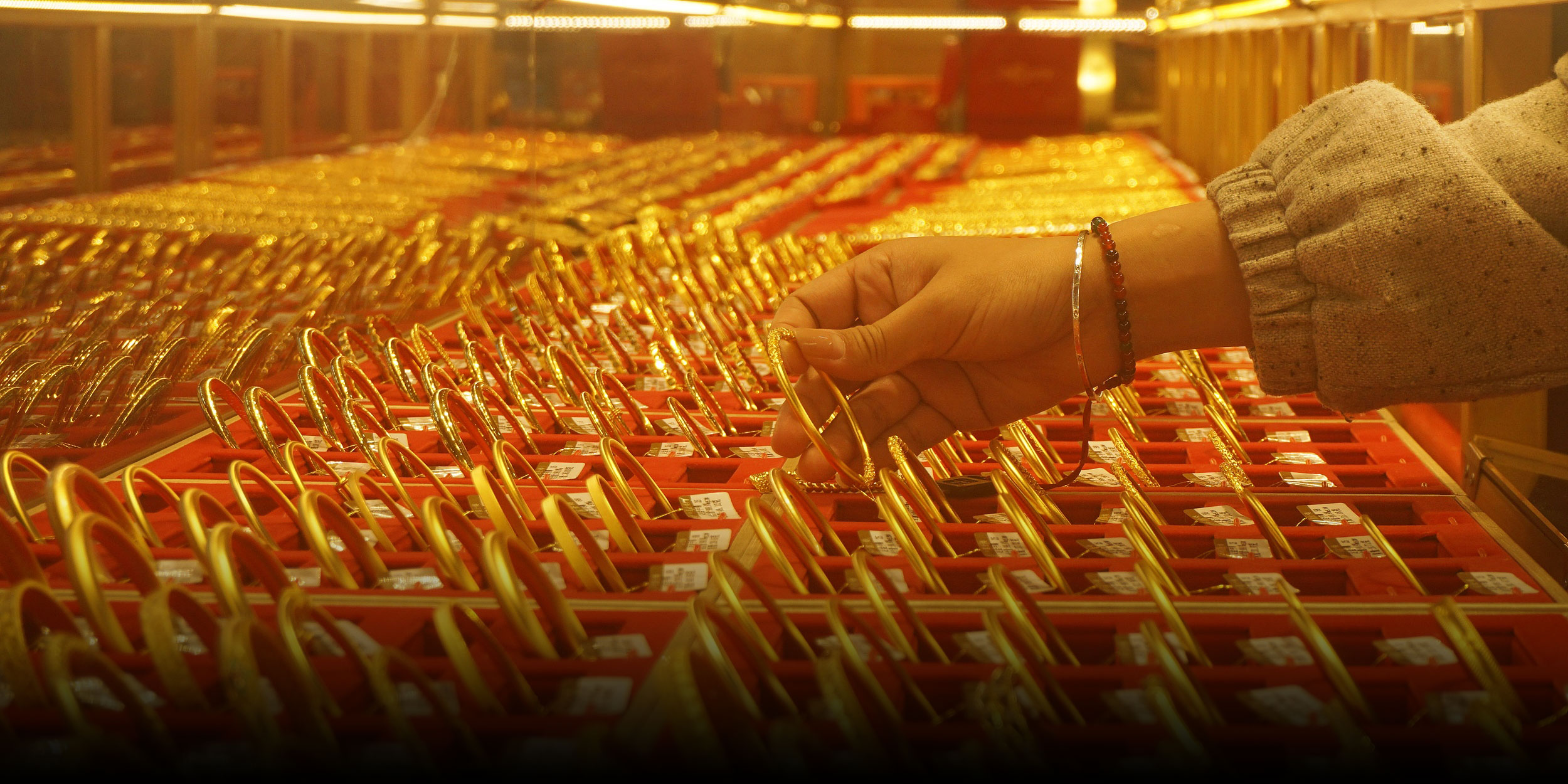
Chinese Gold Retailers Close Stores Amid High Market Prices
Gold retailers in China’s lower-tier cities are bearing the brunt of the global market turbulence, with hundreds of stores closing over the past year as gold prices climb and consumers grow more cautious about investing in the metal. And a newly introduced gold tax is adding further pressure.
This year, major Chinese jewelry brands such as Chow Tai Fook, Chow Sang Sang, Chow Tai Seng, and Lukfook have all reported varying degrees of store closures in their most recent financial reports, published in late October, particularly among franchisees in third- and lower-tier cities.
Chow Tai Seng alone saw its network of franchises shrink by 380 stores in the first three quarters of this year.
“International gold prices have risen rapidly and stayed high,” Chow Tai Seng explained in their third quarter report published on Oct. 29. “Amid macroeconomic uncertainty and weakened consumer demand for jewelry owing to the high price of gold, individual store owners have become cautious, with low willingness to replenish inventory.”
According to a report by the World Gold Council, the spot price of gold broke $4,381.48 per ounce for the first time on Oct. 20, then dropped back below $4,000 within five days, where it has remained. As of Monday, retail gold in China was priced at roughly 1,270 yuan ($178) per gram.
The skyrocketing prices have cooled demand for gold jewelry. The World Gold Council reported that in China, gold jewelry purchases fell 18% from last year to 84 tons, marking the weakest third quarter since 2007. The Council attributed the decline to gold prices rising faster than household income, eroding purchasing power and prompting consumers to delay purchases.
A newly implemented gold tax has further pushed up prices. Effective Nov. 1, the Chinese Ministry of Finance and the State Taxation Administration cut the deductible input value-added tax (VAT) rate for jewelry manufacturers from 13% to 6%, sharply increasing procurement costs. Many stores raised retail prices by 60 to 70 yuan per gram within the week, domestic media reported.
Meanwhile, e-commerce livestreams are reshaping the market, drawing significant customers. Chow Tai Seng reported a 56.34% drop in revenue among its franchises in the first three quarters of this year, while its e-commerce sales grew 17.68%. Lukfook Group also reported a 20% rise in retail value in the Chinese mainland, largely driven by online sales.
In the city of Zhongshan in southern China’s Guangdong province, Lin, a jewelry store owner, told domestic media that customers are far more cautious nowadays when it comes to purchasing gold. “Many check real-time gold prices on their phones. The moment they see prices go up, they say, ‘Let’s wait.’ The higher the price, the colder the business,” Lin said, adding that his inventory this year is down by a third compared to last year.
On social media, the hashtag “rising prices but shrinking stores” has garnered over 16 million views, with some users complaining about soaring prices, while others note that offline shops are no longer their first choice for buying gold.
But while overall jewelry demand has weakened, enthusiasm remains strong in top-tier cities, where some customers line up overnight for new releases.
In a popular post on microblogging platform Weibo, one user summed up the situation: “It’s not that gold has lost its shine — it’s that the way we buy it has radically changed.”
Editor: Marianne Gunnarsson.
(Header image: VCG)